
Build Things Again

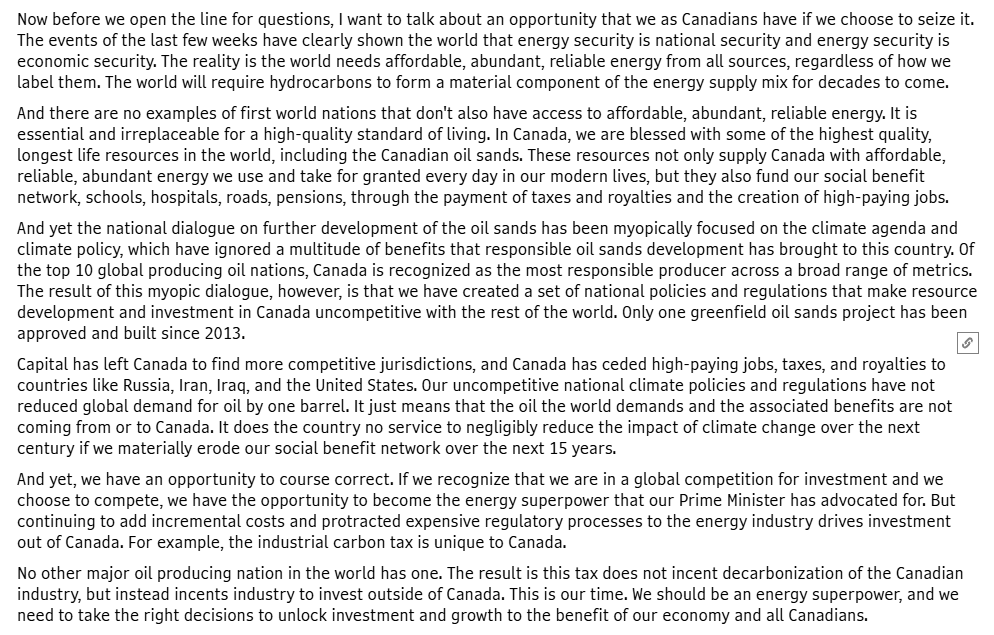
Jon McKenzie, CEO of Cenovus Energy, had some choice words for the Canadian business environment on his Q1 earnings call. The reality is that by failing to develop Canadian resources, we are ceding high-paying jobs, taxes, and royalties to countries like Russia, Iran, Iraq, and the United States. Not only do those revenues flow to geopolitical adversaries, but even if Canada reduced its environmental standards, we would still likely produce energy more responsibly than many of the world’s other producers. The global economy is going to consume fossil fuels one way or another. We might as well participate.
The same week, Tim Houston was thanking Mark Carney for green-lighting offshore exploration projects in Nova Scotia, so it’s difficult to tell exactly where policy is heading.
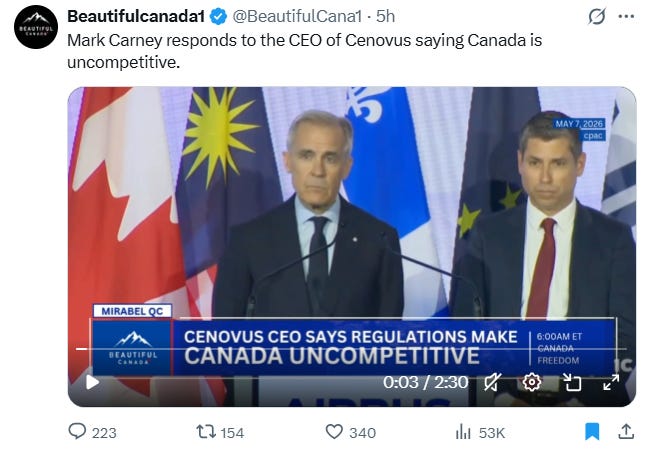
With that being said, Carney’s response was disappointing. He argued that Asian markets prefer low-carbon fossil fuels. Even if that is true, then the obvious answer should be figuring out how Canada can supply more of them. (link)
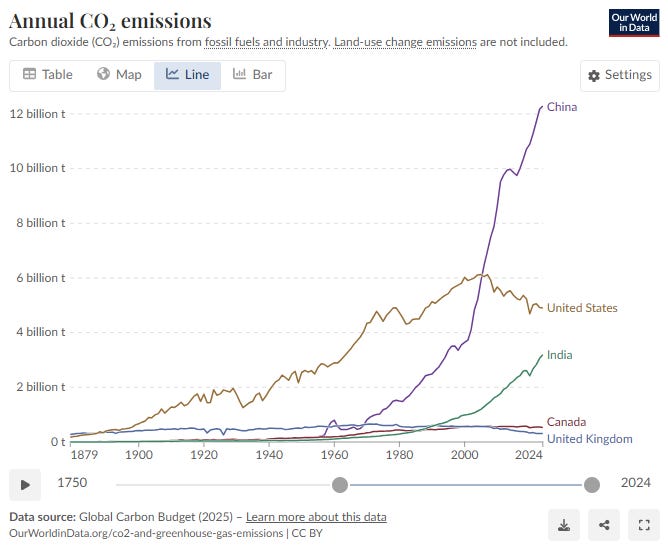
China emits roughly 25x more than Canada, while Canada accounts for only ~1.5% of global emissions. Canada could theoretically double emissions and it would barely move the needle globally.
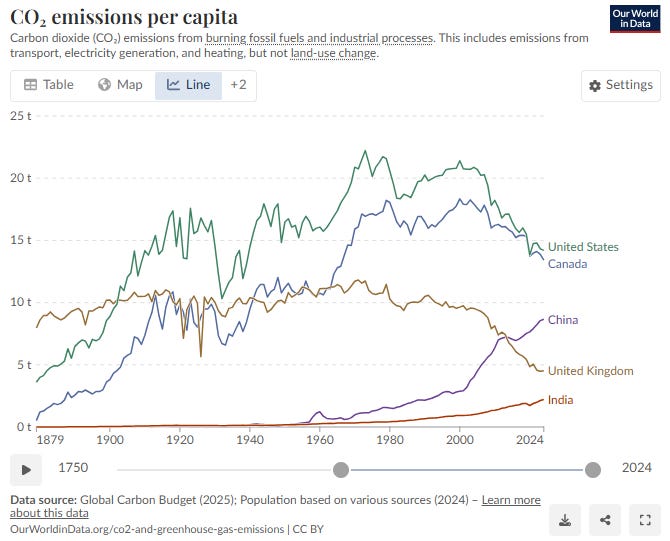
On a per capita basis, Canada has done a good job decarbonizing. But as the developing world becomes wealthier, energy consumption will continue to rise. Canada has an opportunity to supply that energy while also reducing its dependence on a single customer relationship with the U.S.
As Tobi Lütke said on the podcast I shared earlier this week, Canada could become one of the richest countries in the world.
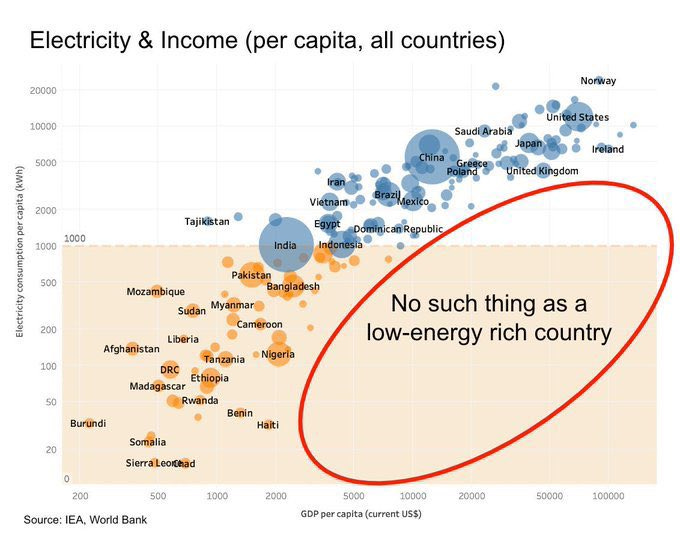
The developing world will continue consuming more energy as incomes rise because there is no such thing as a low-energy rich country.
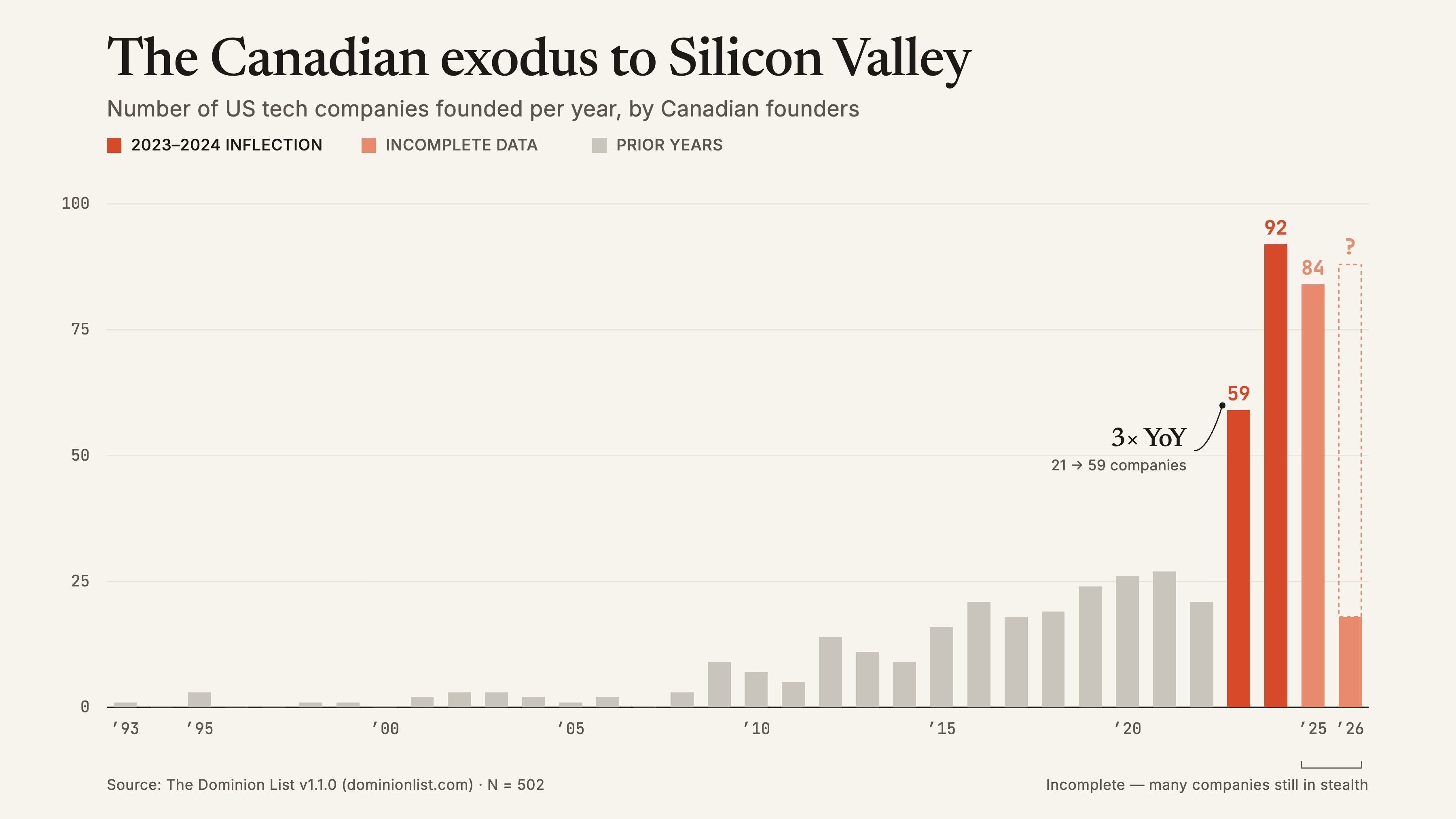
Adding salt to the wound, Canadian founders are increasingly choosing to build in the U.S instead of Canada. Both issues ultimately come back to the same challenge: creating an environment that encourages investment and entrepreneurship in Canada. We should be developing resources while also fostering a stronger domestic tech industry. One is easier than the other, but both should be priorities. Build Canada lays out some ideas in this essay.
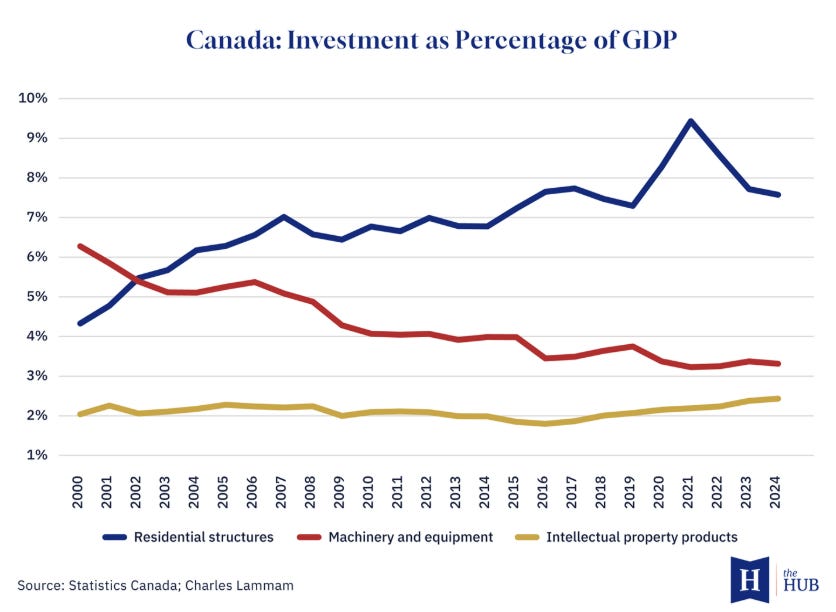
Canada’s economy is far too dependent on housing, when we should be prioritizing productive investment instead. (Charles Lammam)
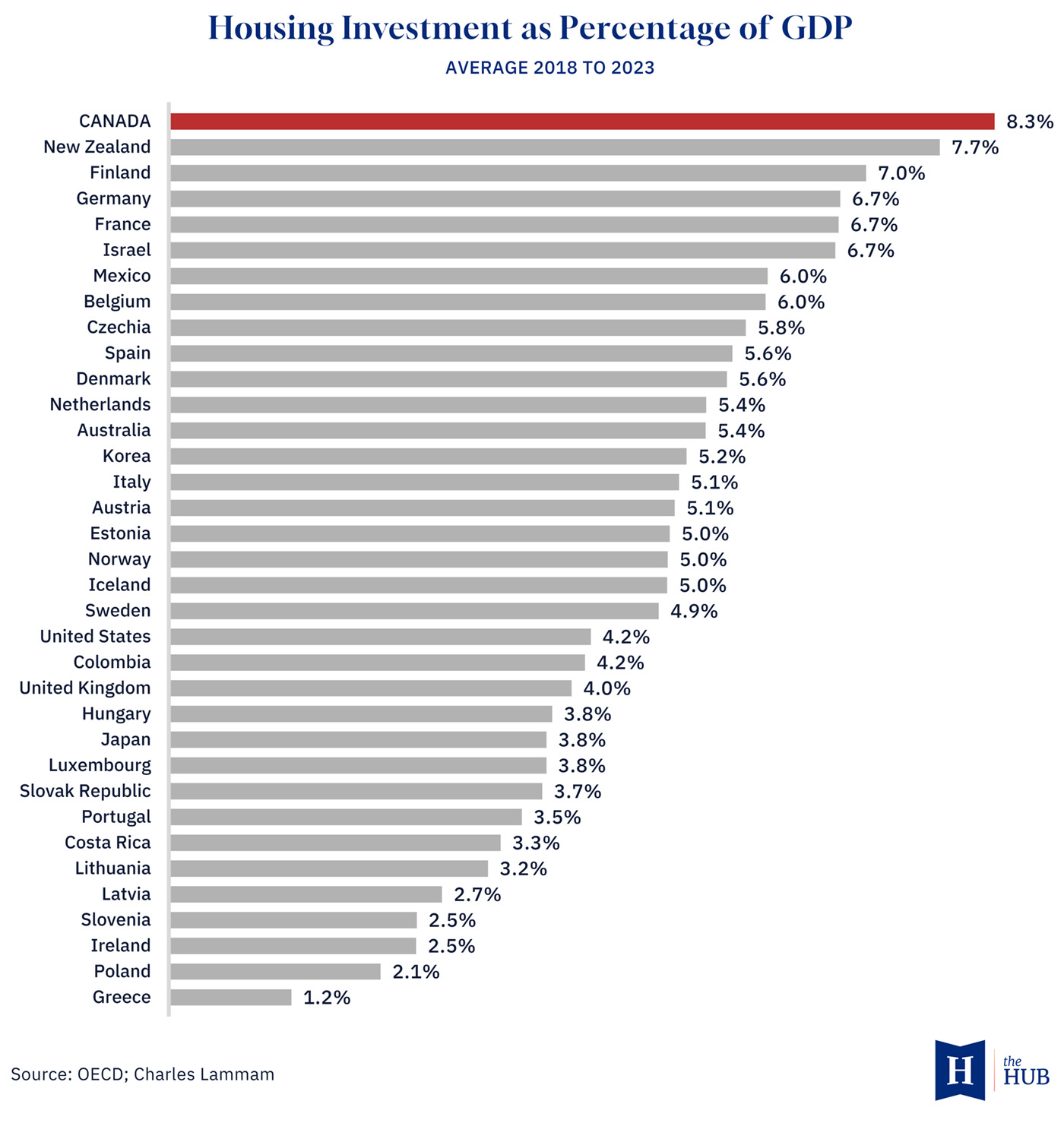
Canada has some of the highest housing investment as a percentage of GDP in the world. (Charles Lammam)
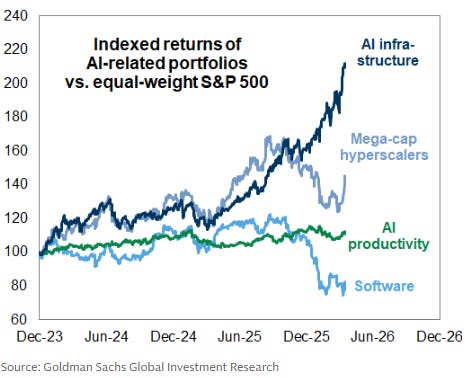
AI infrastructure has been the trade. (GS)
Michael Burry is out here comparing the NASDAQ Composite to the dot-com bubble.
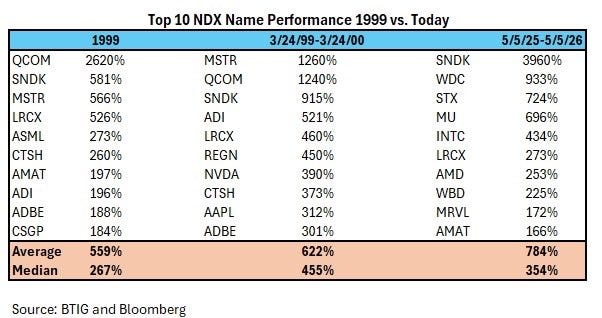
The difference today is that the appreciation is not primarily coming from multiple expansion. It is coming from earnings. The real question becomes: when do these cyclical earnings peak?
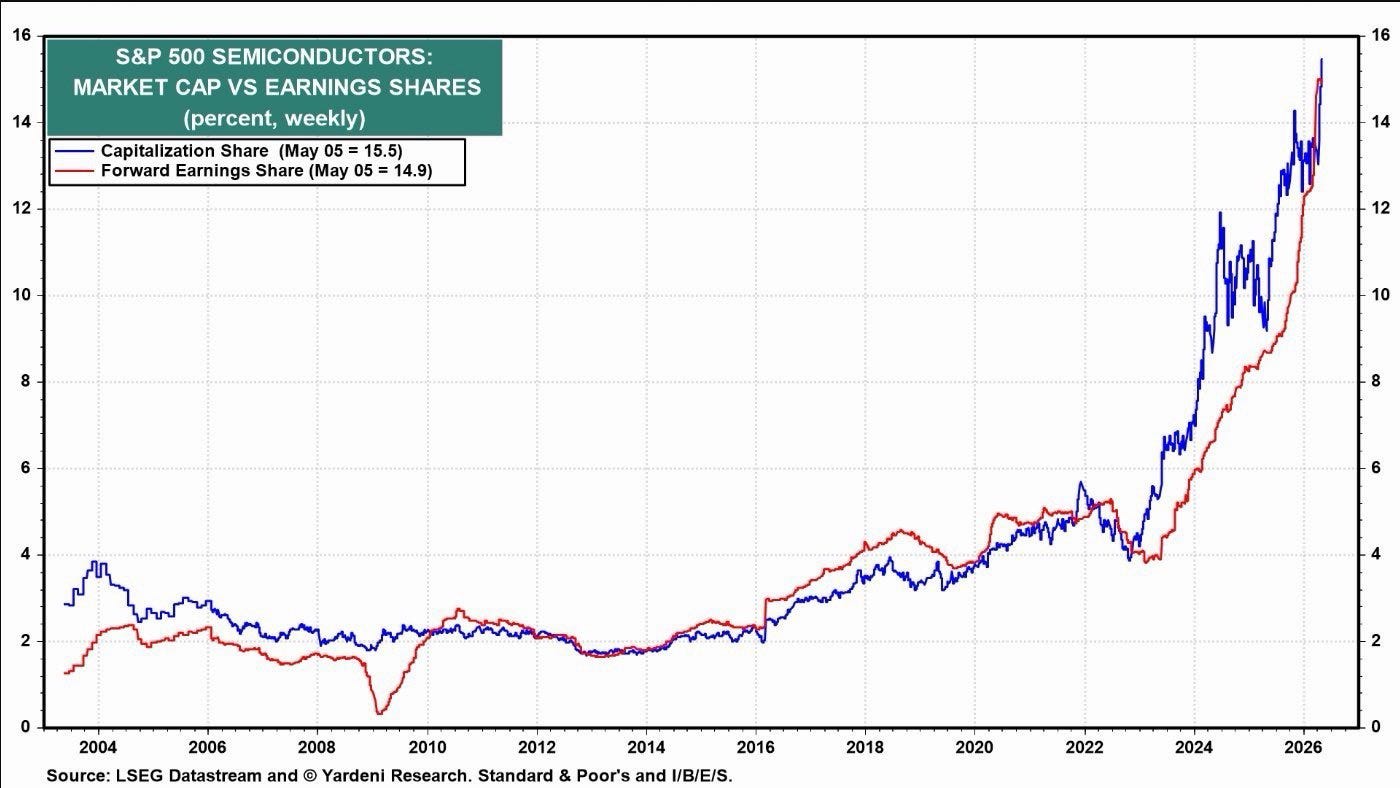
Some are bearish, some are bullish. The bears risk becoming part of the permanent AI underclass before the singularity arrives. The bulls are betting that trillions of dollars of data center investment still lie ahead. I worry more about being too late.
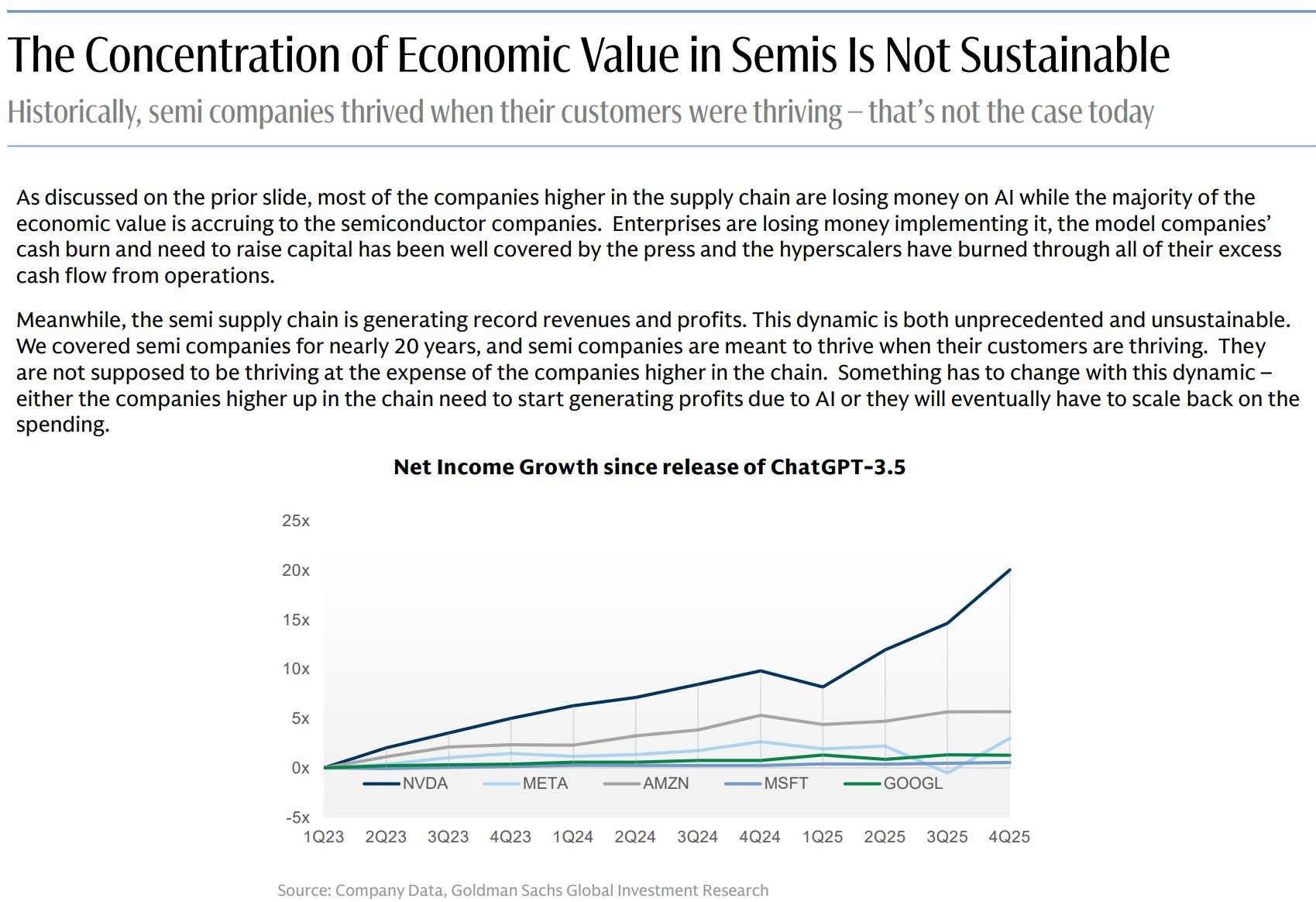
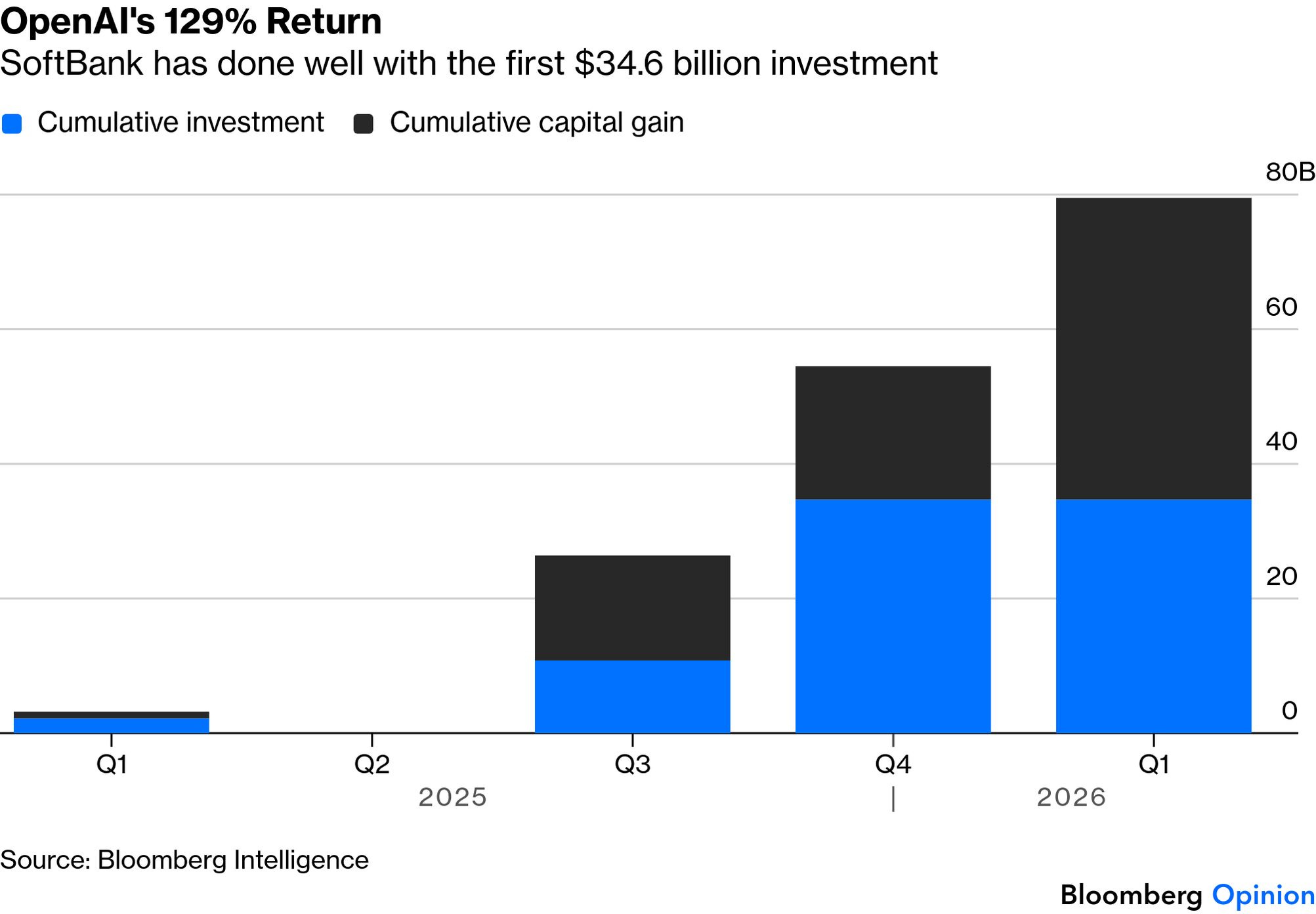
Being late certainly was not an issue for SoftBank Group. They have reportedly made over 129% on their $34.6B investment in OpenAI. Talk about a big bet.
Capital ultimately flows toward jurisdictions with stable policy, permitting visibility, and attractive long-term returns.
Energy security and investment competitiveness are becoming increasingly linked again.