
Collateral Damage 🛢️

Is the U.S. losing the war, or is this a strategic gambit? Hard to say. What is clear is positioning. The U.S. is far better insulated from high energy prices than Europe or Asia. Energy independence matters, as I wrote about just over a month ago and it is showing up in real time.
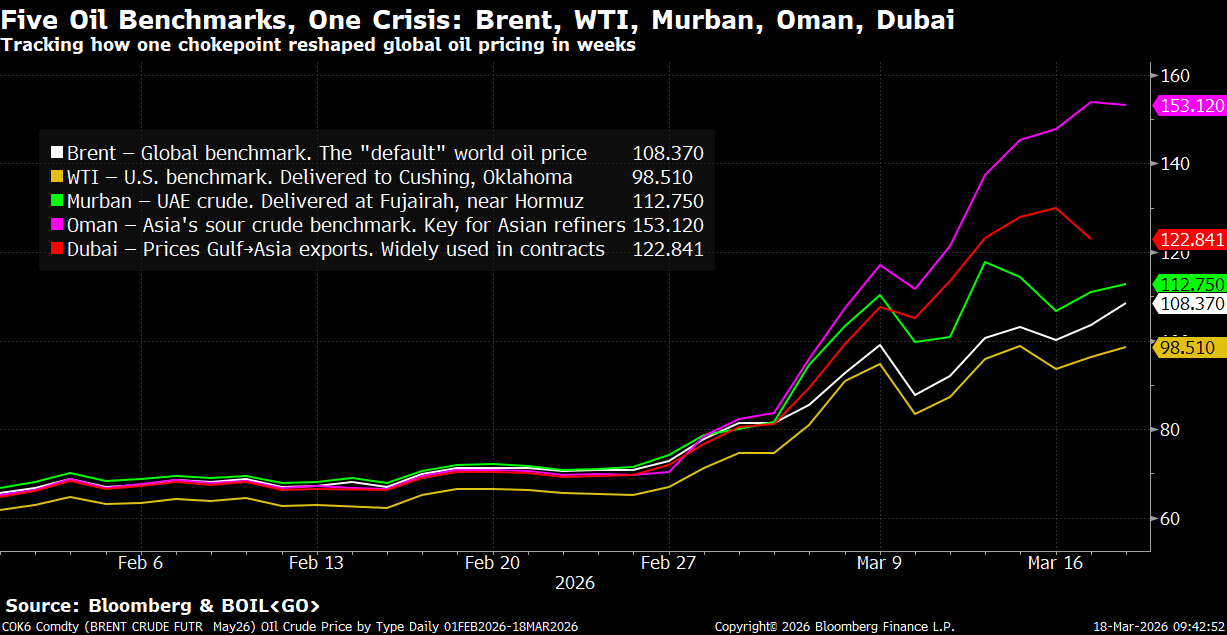
Oil is global, but pricing is fragmenting. With the Strait of Hormuz disrupted, spreads between WTI, Brent, and Middle Eastern grades are widening. That should not happen in a frictionless market. It is now.(@M_McDonough)
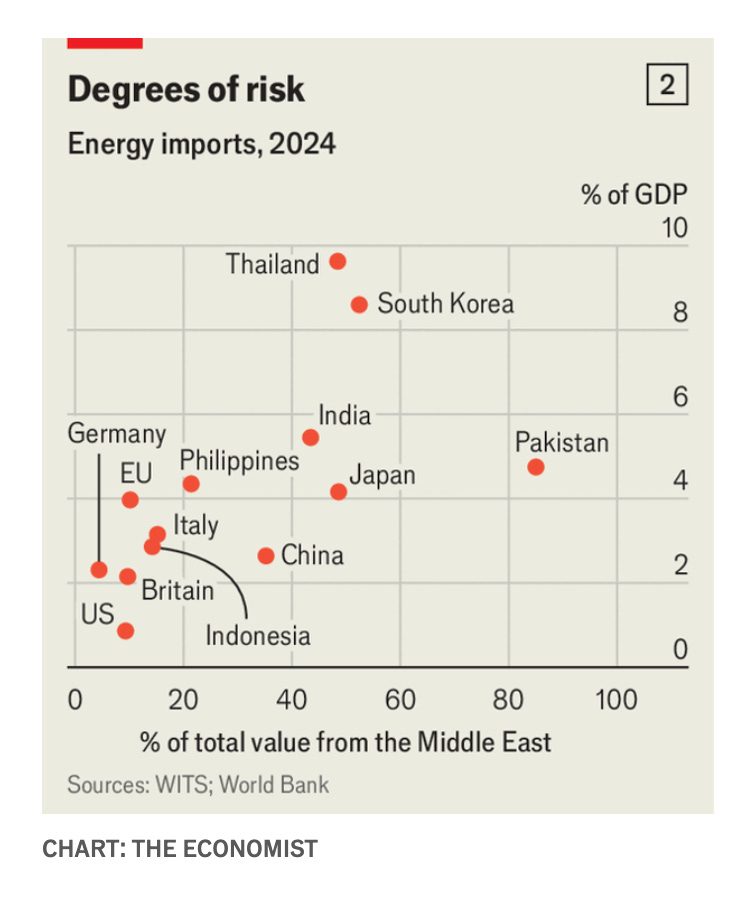
The pressure lands squarely on Asia. Heavy reliance on Middle East imports leaves them exposed. They will scramble for supply, competing with Europe and pushing prices higher. In an extreme scenario, a U.S. export ban could fully decouple domestic prices from global markets. (The Economist)
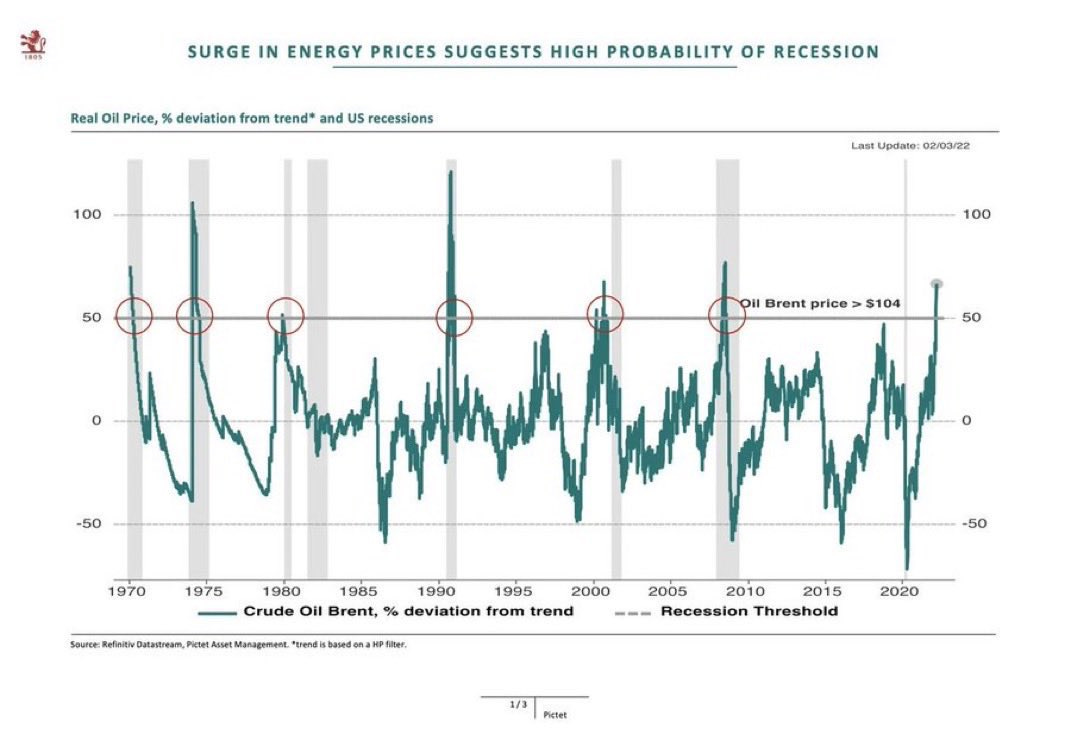
Energy shocks hit growth. Higher oil prices tax the consumer and raise input costs across the economy. Historically, sharp spikes have been closely tied to recessions. Manufacturing-heavy economies in Asia are most at risk. (Tavi Costa)
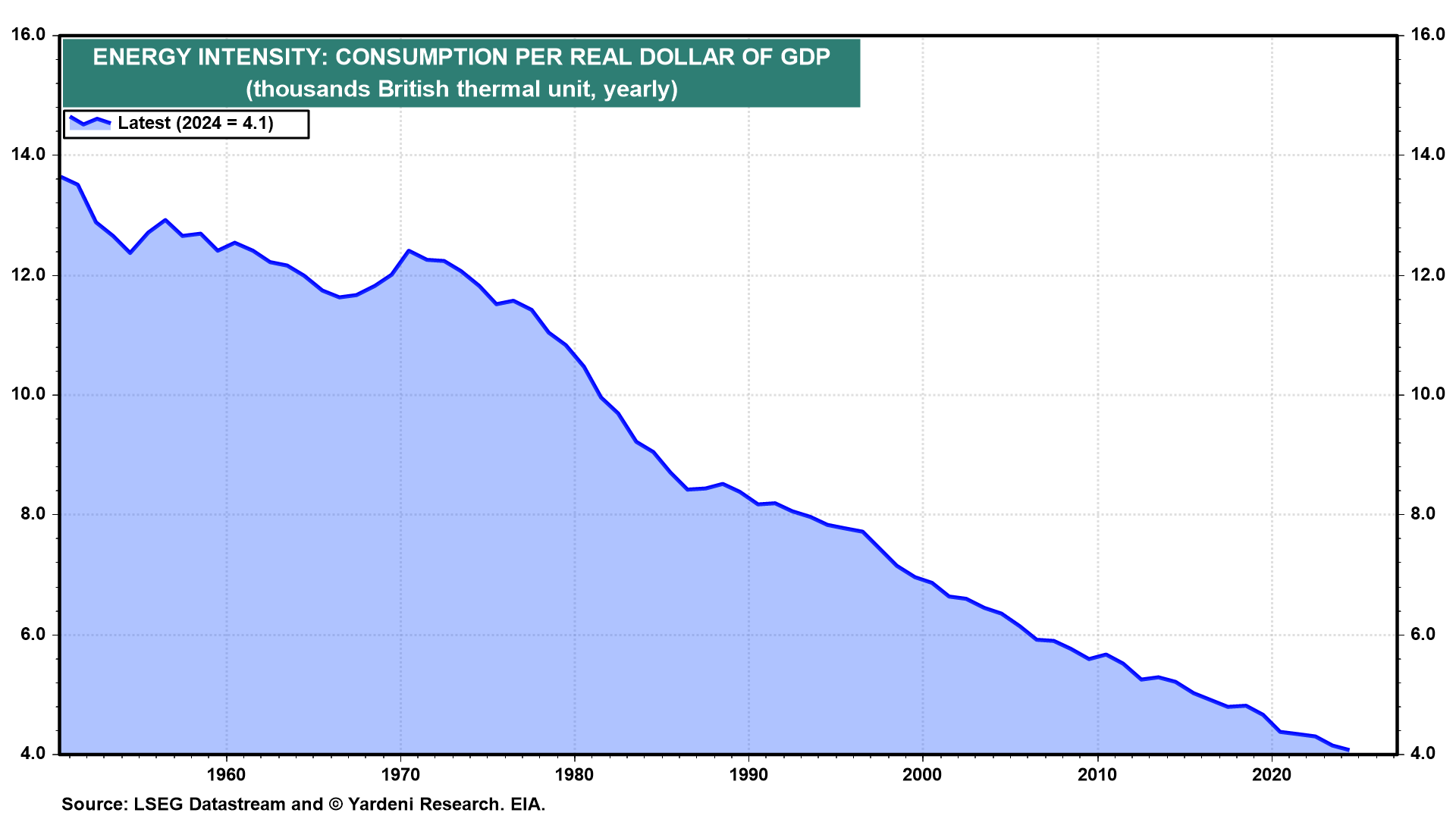
But the U.S. is different today. Energy intensity has declined meaningfully. Less energy is required per unit of GDP. The economy has shifted toward services. Oil shocks still matter, just less than they used to. (@Greenbackd)
Across Asia, the strain is already visible. In many countries, Brent has never been this expensive in local terms. (PauloMacro)
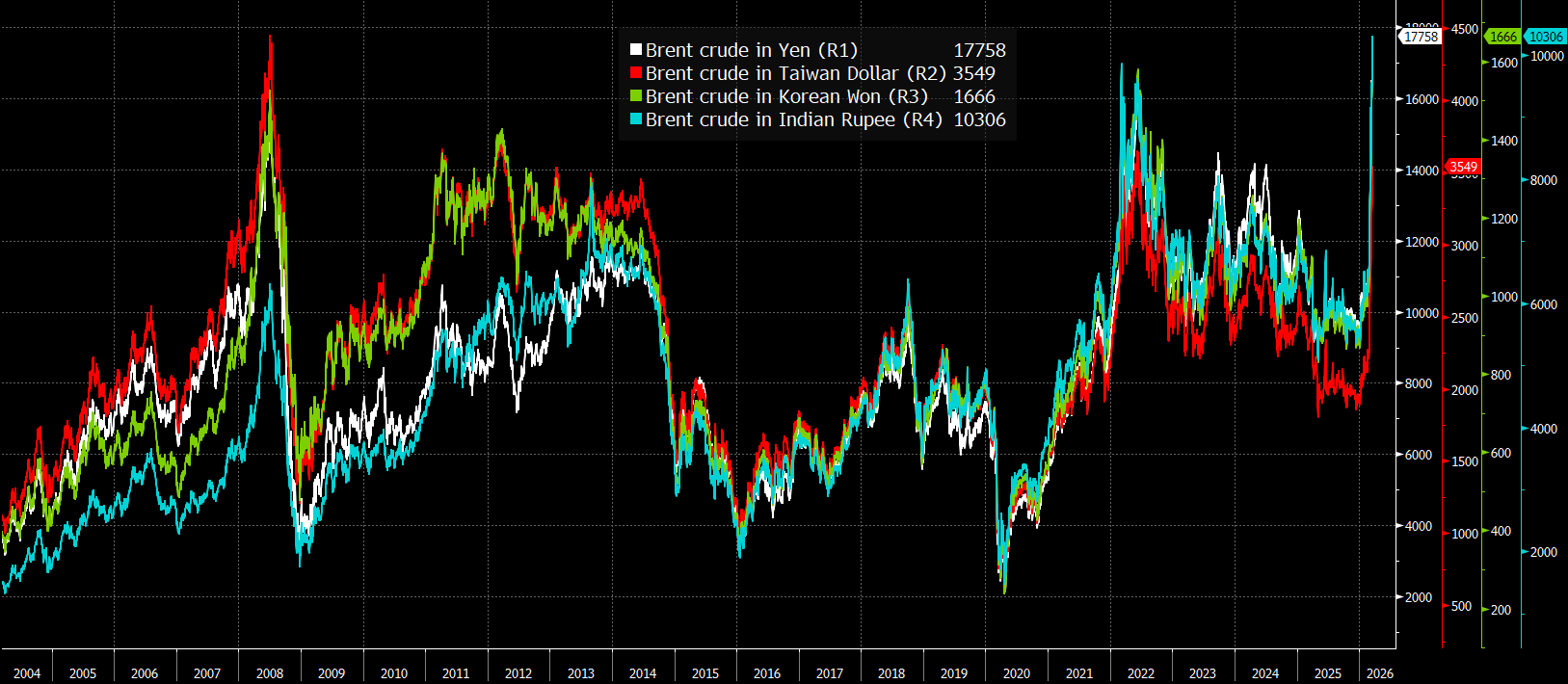
Governments are starting to respond. We can only hope to avoid energy lockdowns… (BBC)

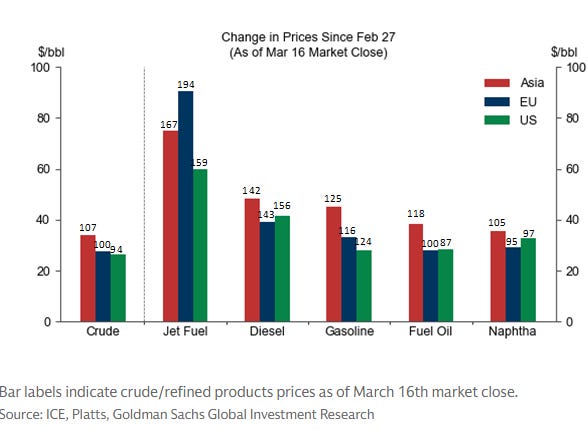
Commodities are moving fast. Oil and fossil fuels have surged since late February. This is bleeding into other markets. (@MikeZaccardi)
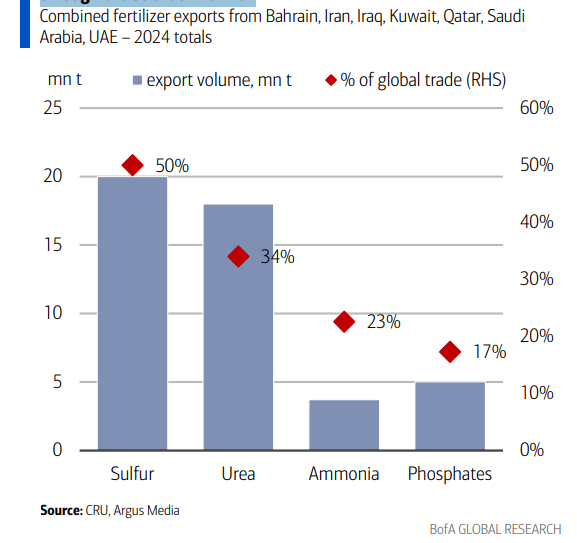
The Gulf accounts for roughly half of global sulfur trade and over a third of urea exports. Fertilizer is rising alongside energy. (@AzizSapphire)
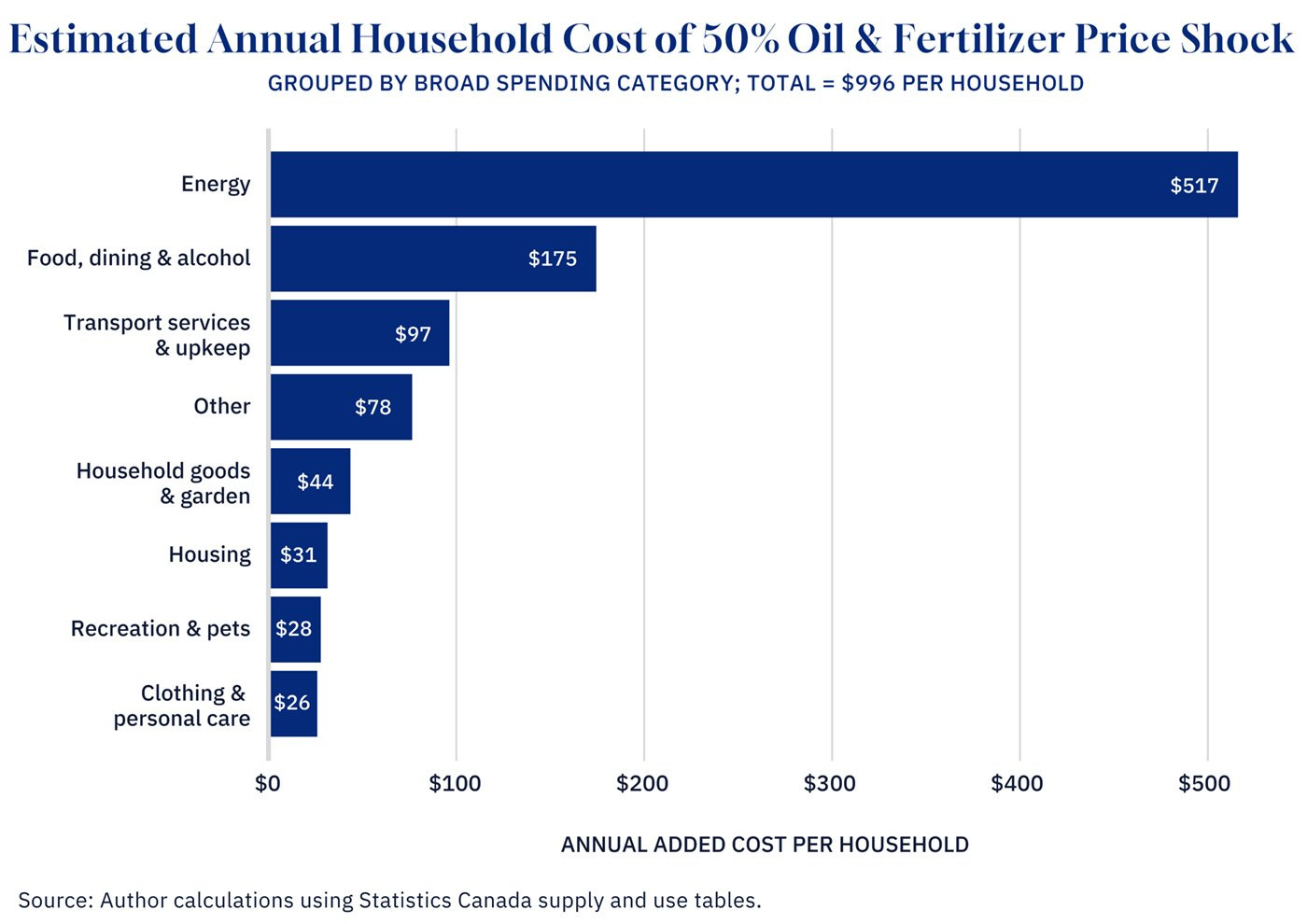
That feeds inflation. A 50% increase in oil and fertilizer could add roughly $1,000 per year to the average Canadian household. The inflation story is not over. (Trevor Tombe)
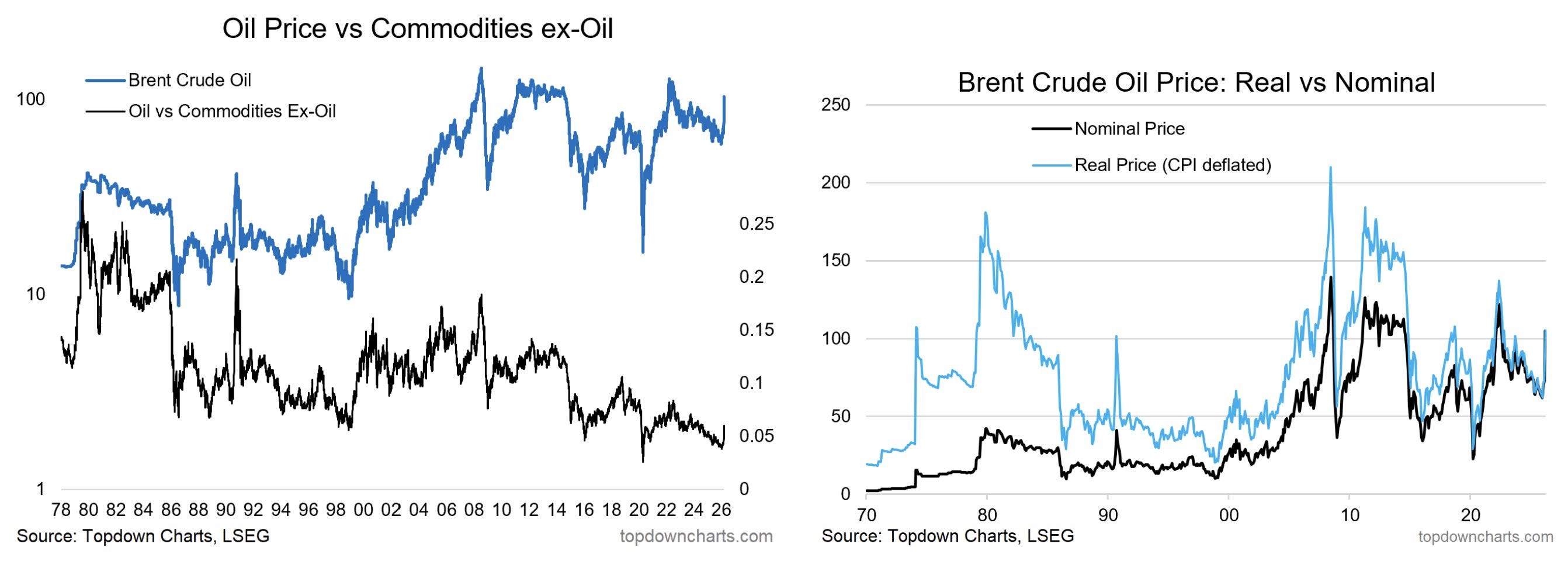
And while triple digit crude prices seem high, this isn’t anywhere near bad on a historical basis. (Callum Thomas)
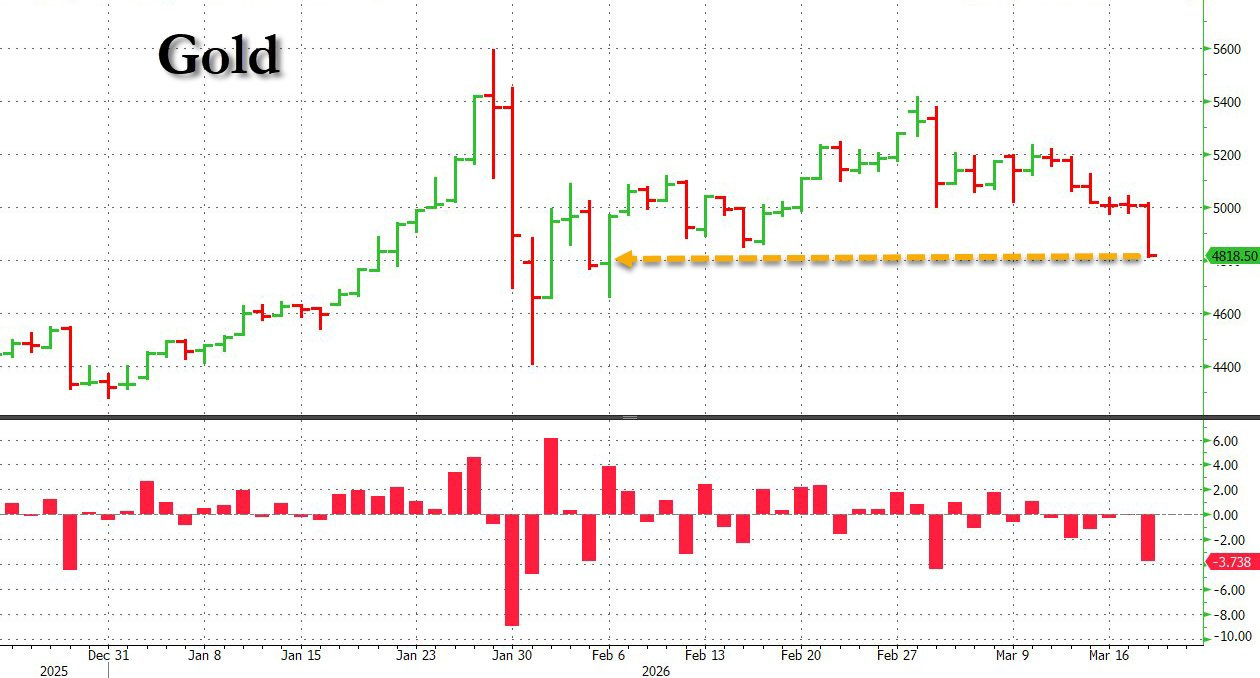
Gold’s reaction has been puzzling. Down nearly 4% in a single session. Likely rotation into energy. (@zerohedge)
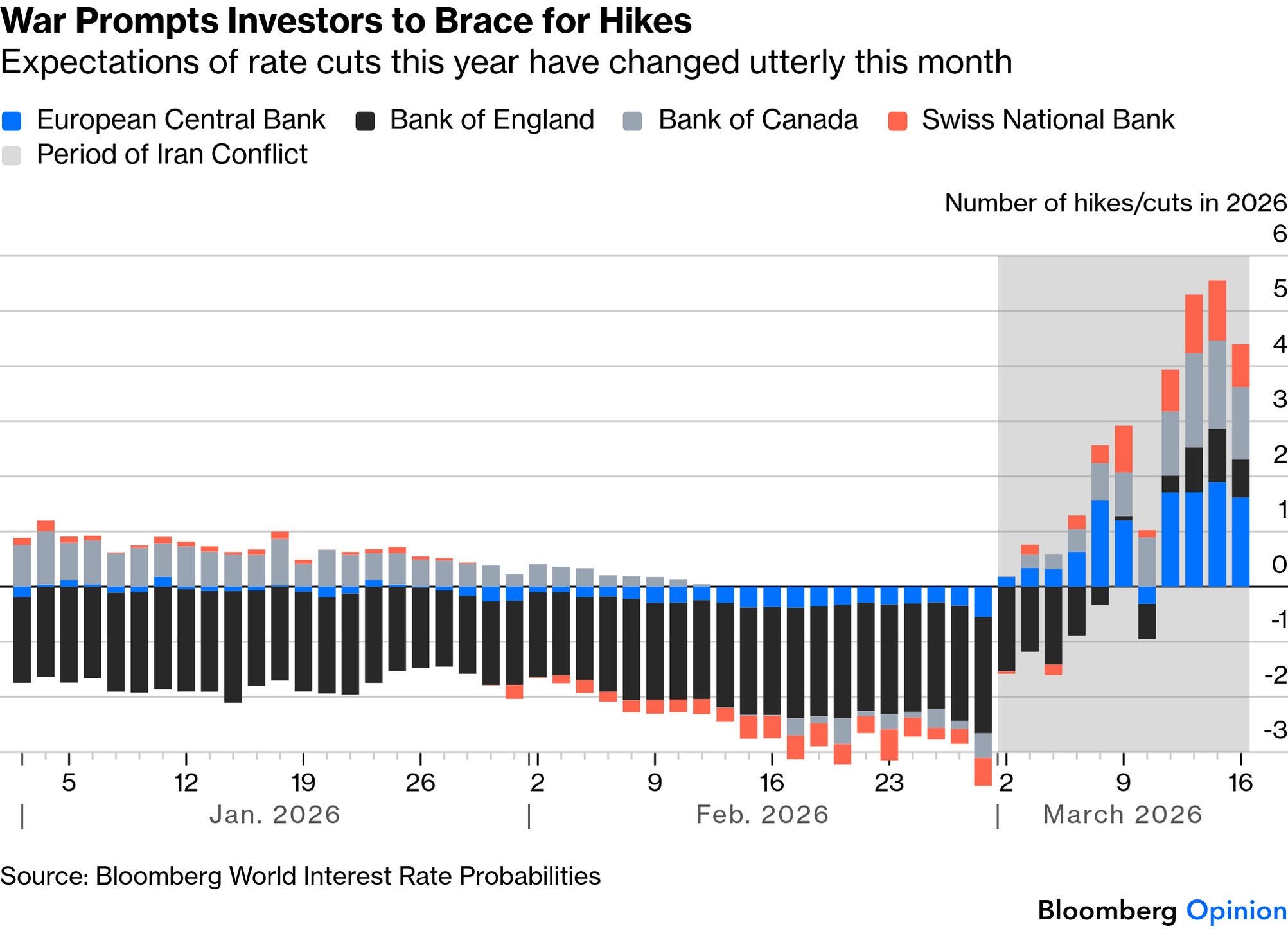
Central banks are in a tough spot. Markets are starting to price hikes again. Using rates to fight a supply-driven commodity shock is a blunt tool at best. (Bloomberg)
The key question remains duration. If the conflict drags on and infrastructure is impaired, this becomes structural. Key Gulf energy infrastructure was hit again last night. For now, the trajectory still points one way. Higher volatility. Higher energy. Longer-lasting pressure.