MDW Canada Special 🍁

US markets suffered their worst week since early April amid renewed tariff threats from Trump targeting Europe and Apple. Although Sunday evening, the European tariffs had already been delayed into July. Japanese yields increased, raising concerns. International markets outperformed, while Energy and Tech were the worst performing domestic sectors.
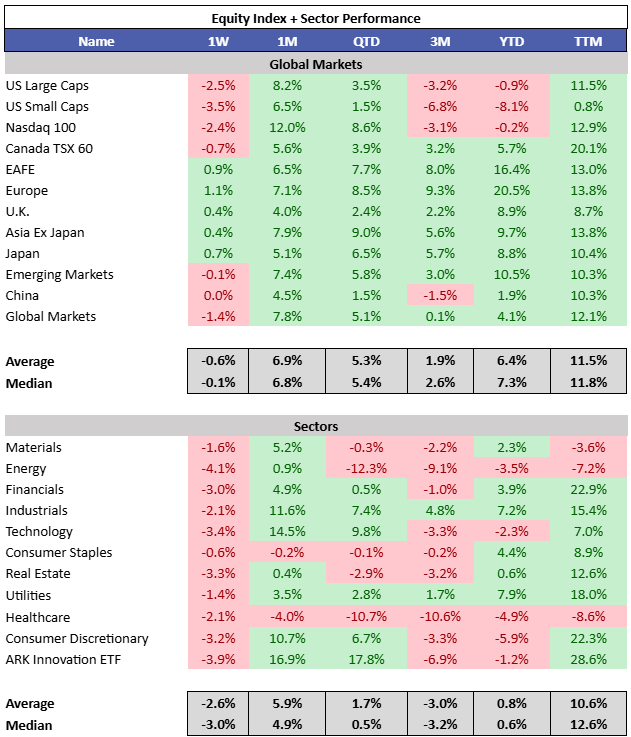
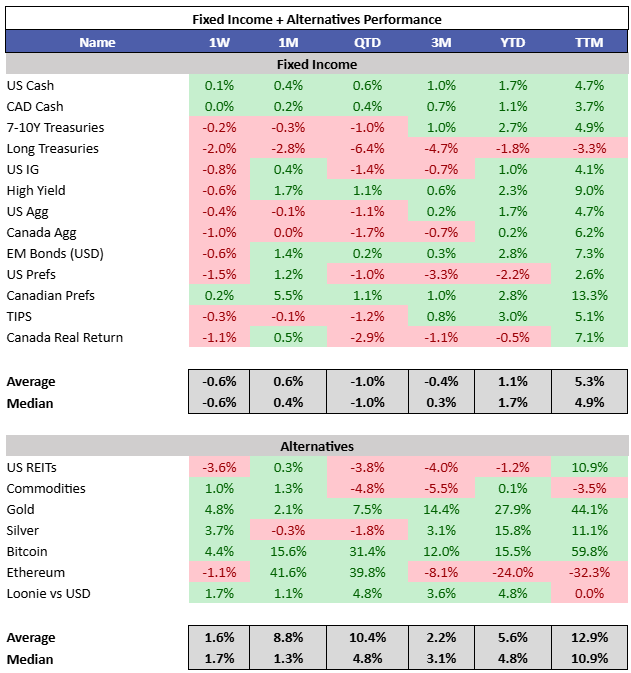
10Y yields rose 3 bps in the US and 18 bps in Canada. Commodities were buoyed by a strong week for precious metals. Bitcoin hit new all time highs. CAD rallied.
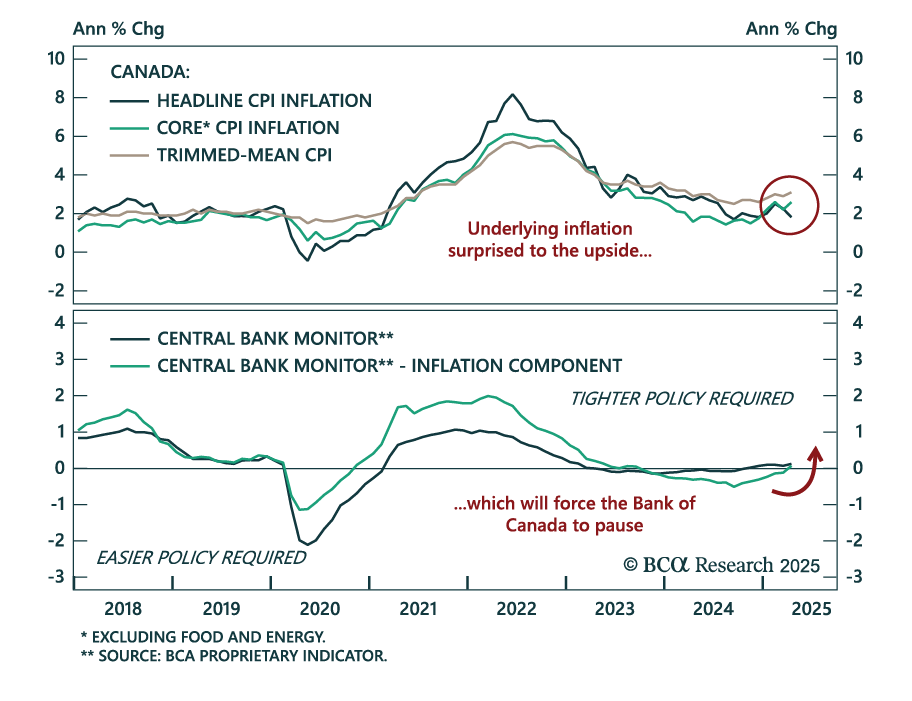
Canada's headline CPI slowed to 1.7% YoY from 2.3% on Tuesday, but stronger than expected underlying inflation data suggests the Bank of Canada (BoC) is likely to hold steady at its meeting in three weeks. The expected CPI slowdown was largely due to an 18.1% YoY drop in gasoline prices after the carbon tax removal. However, the BoC will likely focus on the rebound in underlying inflation, with core inflation rising 0.5% MoM (vs. 0.2% expected) to 2.5% YoY, and median and trimmed-mean CPI exceeding the BoC’s 1%-3% target range. (BCA)
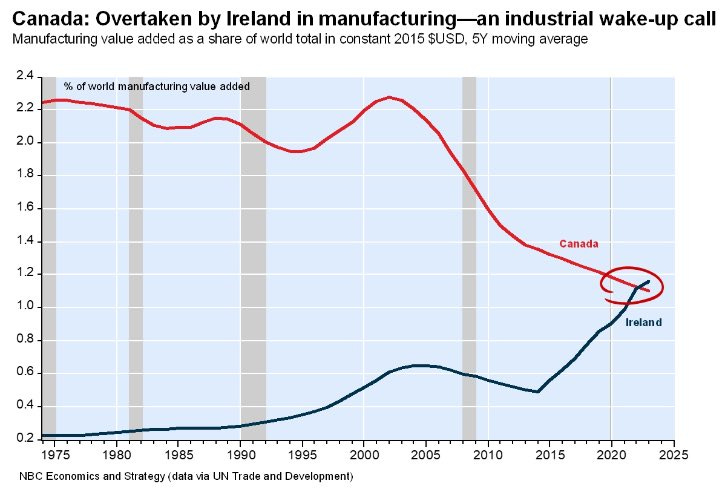
Canadian manufacturing is under pressure from the US, highlighted by recent auto sector job losses. Canadian manufacturing struggles began in the 2000s, and offshoring to China isn’t entirely to blame, as Ireland has increased its manufacturing share over the same time period. (@PierrePoilievre)
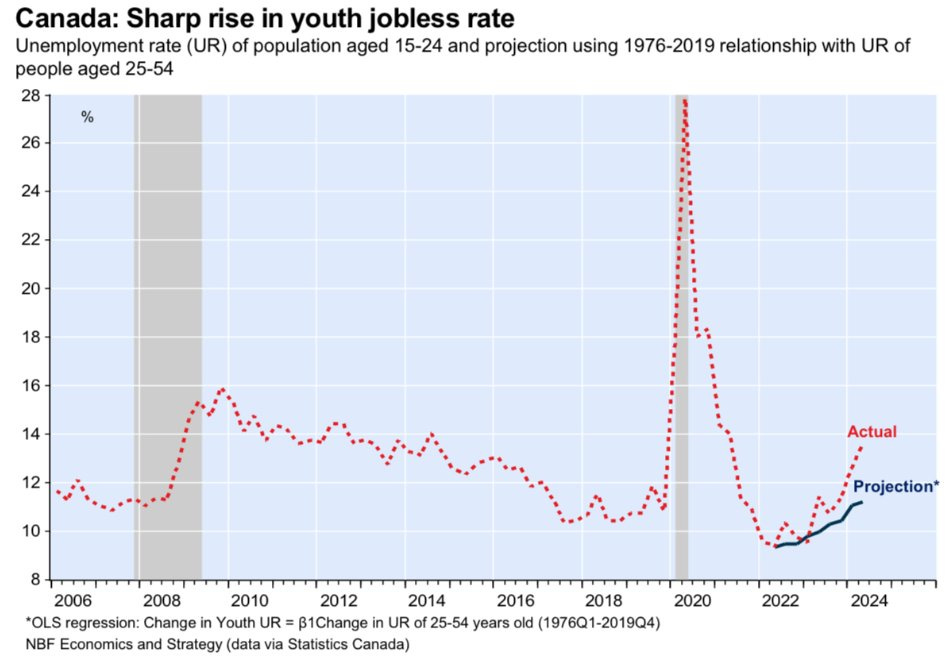
Canada's weakening labour market disproportionately affects young workers; in 2024, their unemployment rate (13.2%) was more than double that of core-aged adults (5.4%). This cohort also competes with foreign workers. (@daniel_foch)
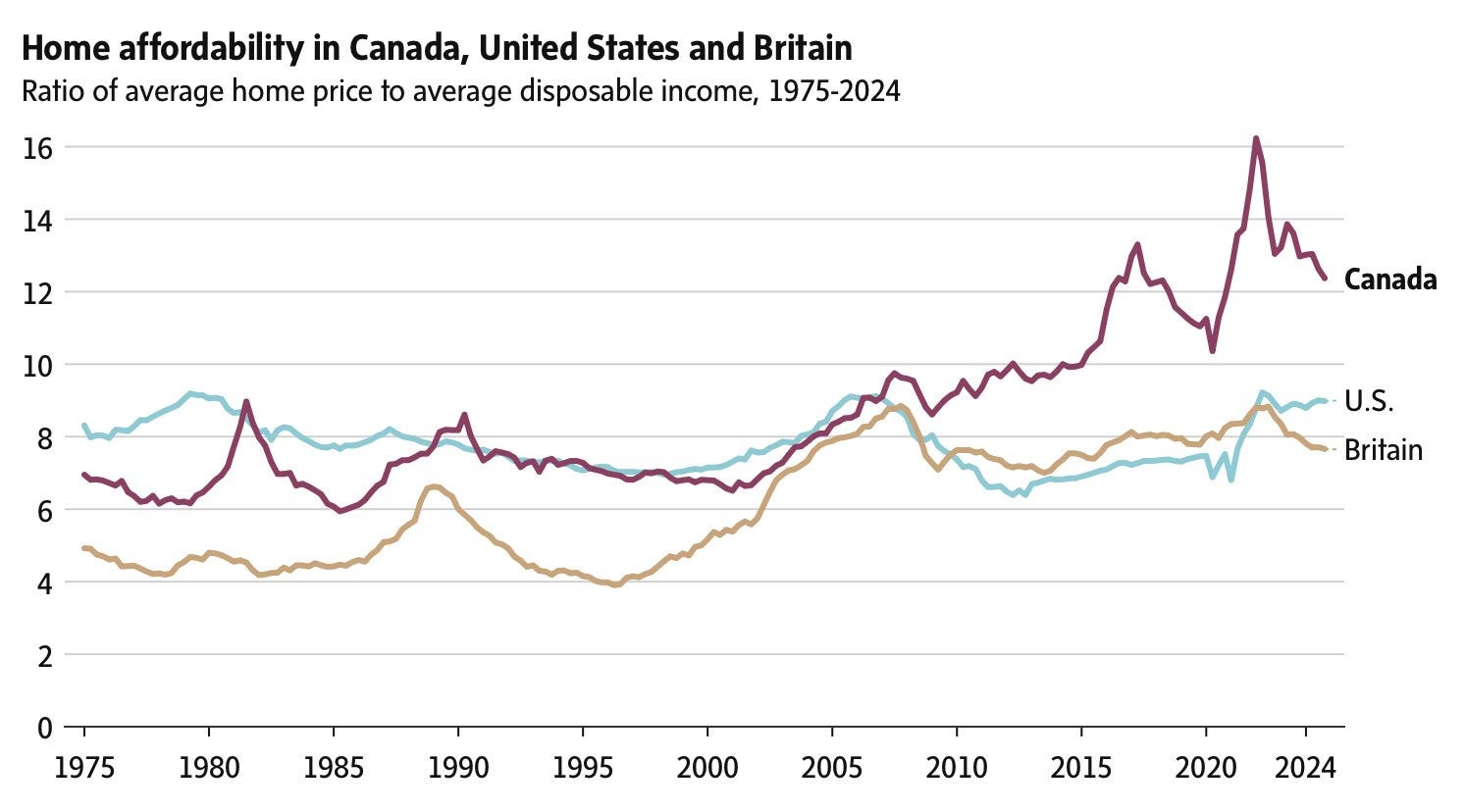
Compounding issues for young people, the housing market remains unaffordable relative to disposable incomes. (@MikePMoffatt)
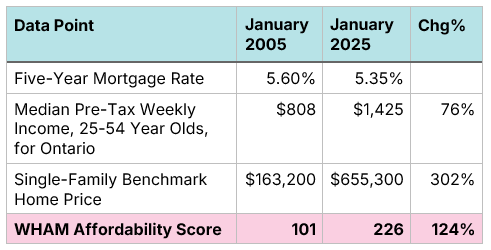
The justification for high housing prices was lower mortgage rates. Mortgage rates are now at 2005 levels, while home prices have increased by 302% since then, compared to a 76% rise in incomes. (Missing Middle Initiative)
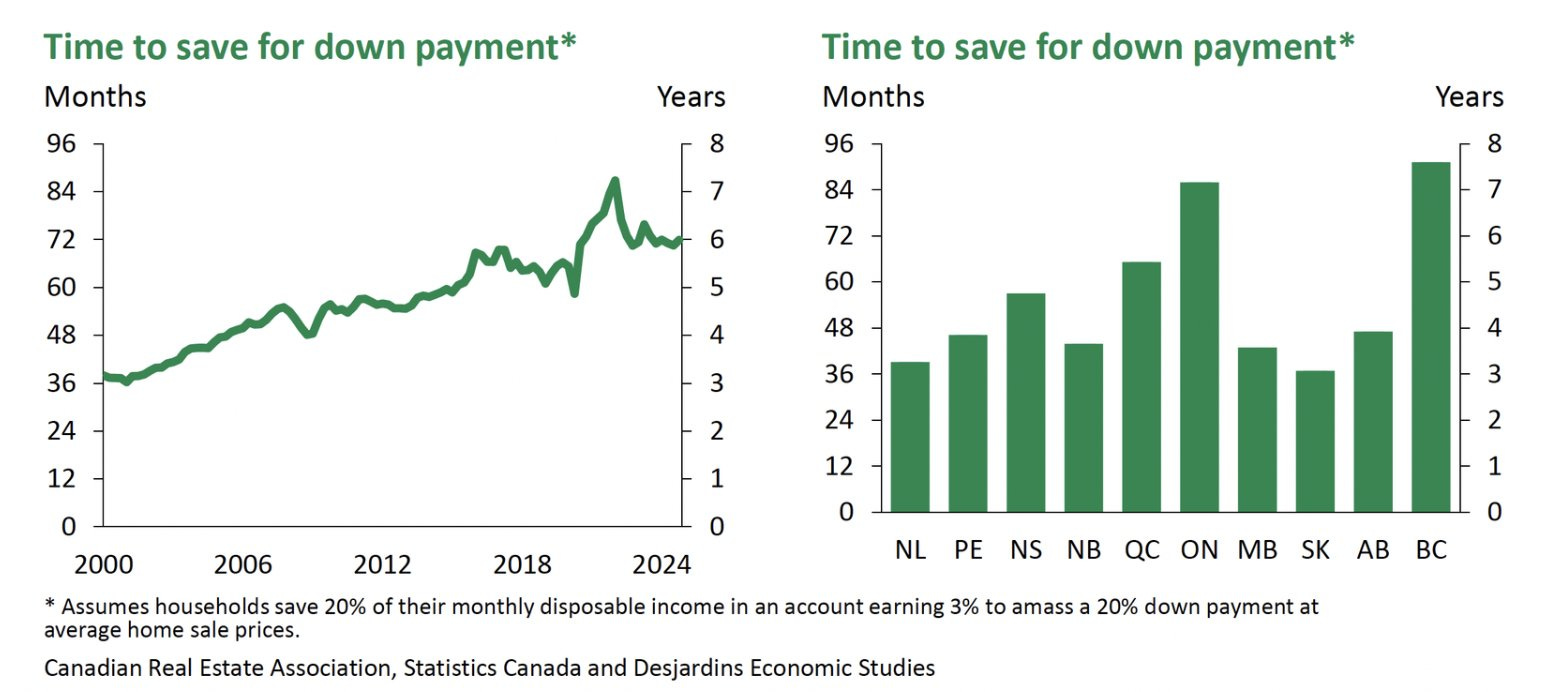
Ontario and BC are the most unaffordable regions, with down payment savings times having doubled since 2000. High housing prices burden young people, delaying family formation and hindering productive investment as they become house poor. Reducing prices faces resistance due to the older, homeowner voter base. @SteveSaretsky
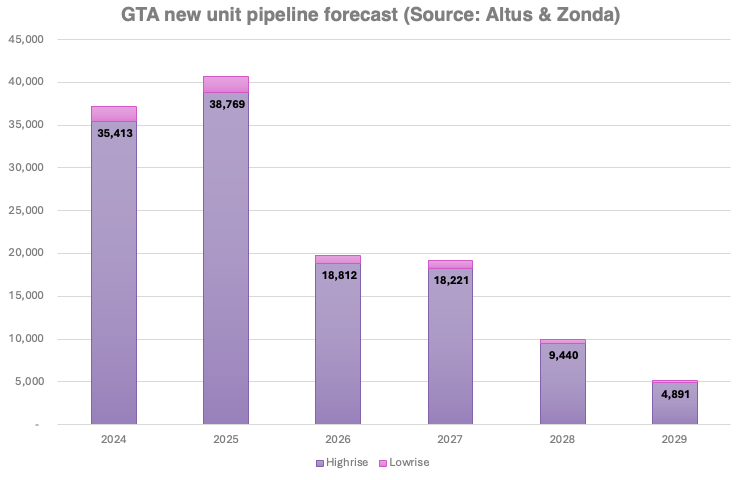
Condo prices in the GTA are expected to remain under pressure until new supply begins slowing into the late 2020s. (@daniel_foch)
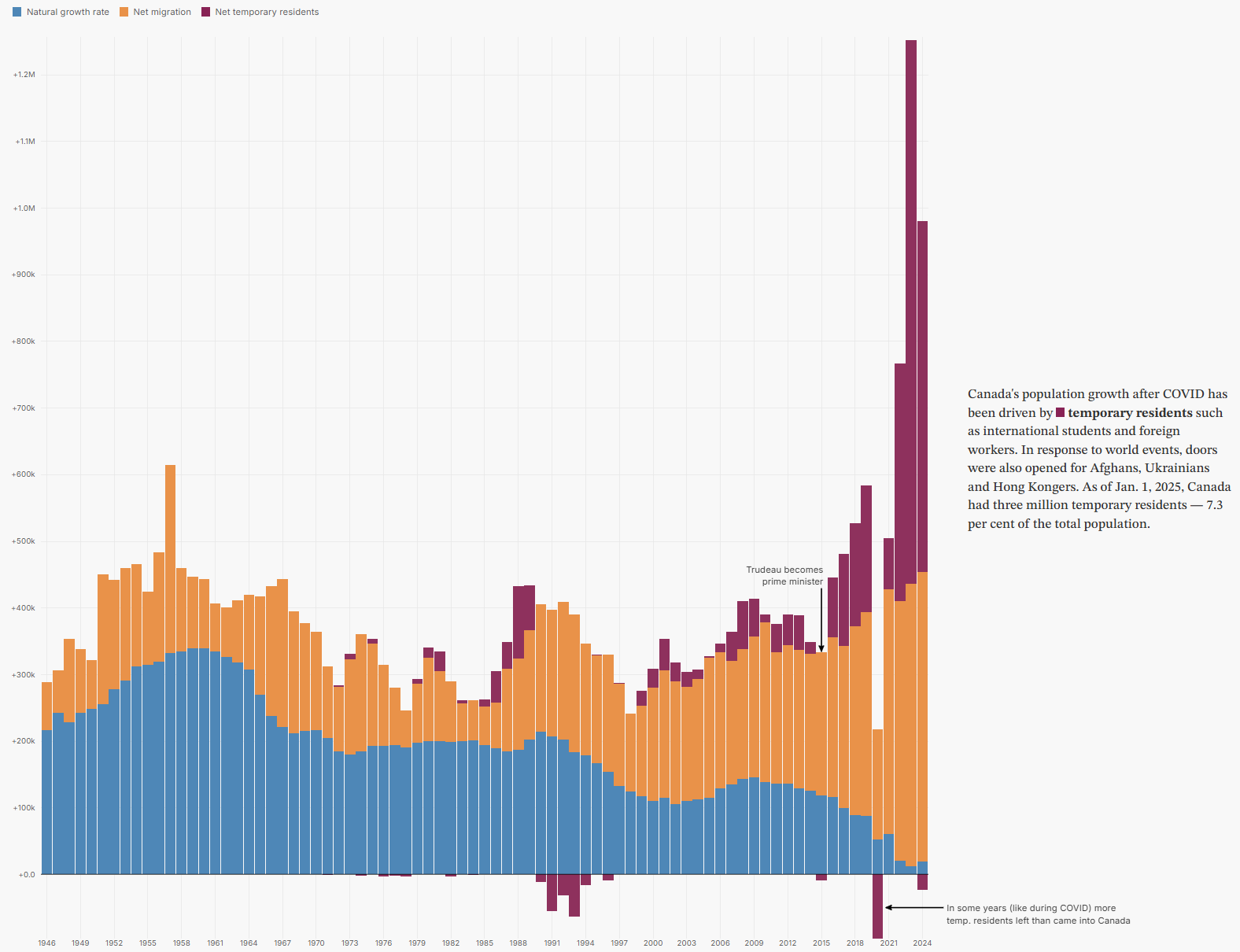
Canadian immigration policy has dramatically increased in recent years, tripling the long-term average. While immigration is necessary to address Canada's aging population, a more thoughtful approach is needed, particularly regarding infrastructure investment to accommodate large population increases. The Build Canada initiative wrote a thoughtful article on how immigration could be reformed. The world's most innovative companies compete for top talent. It's time Canada competed the same way for immigrants. (The Star)
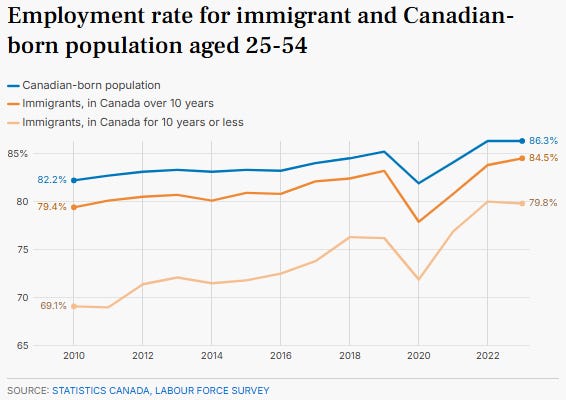
Immigration makes less sense if newcomers aren’t working. (The Star)
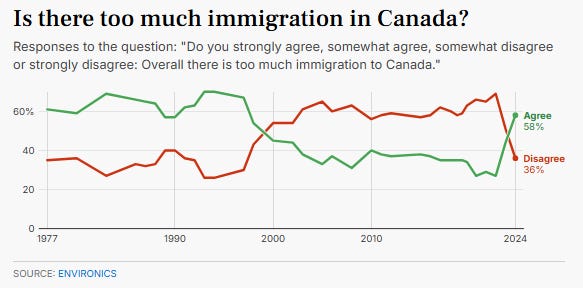
The consensus on immigration has shifted for the first time in 2 and a half decades.(The Star)