Stagnation

Interesting and disappointing article about Canadian incomes. They focus on incomes as it is linked to productivity but a less abstract measure.
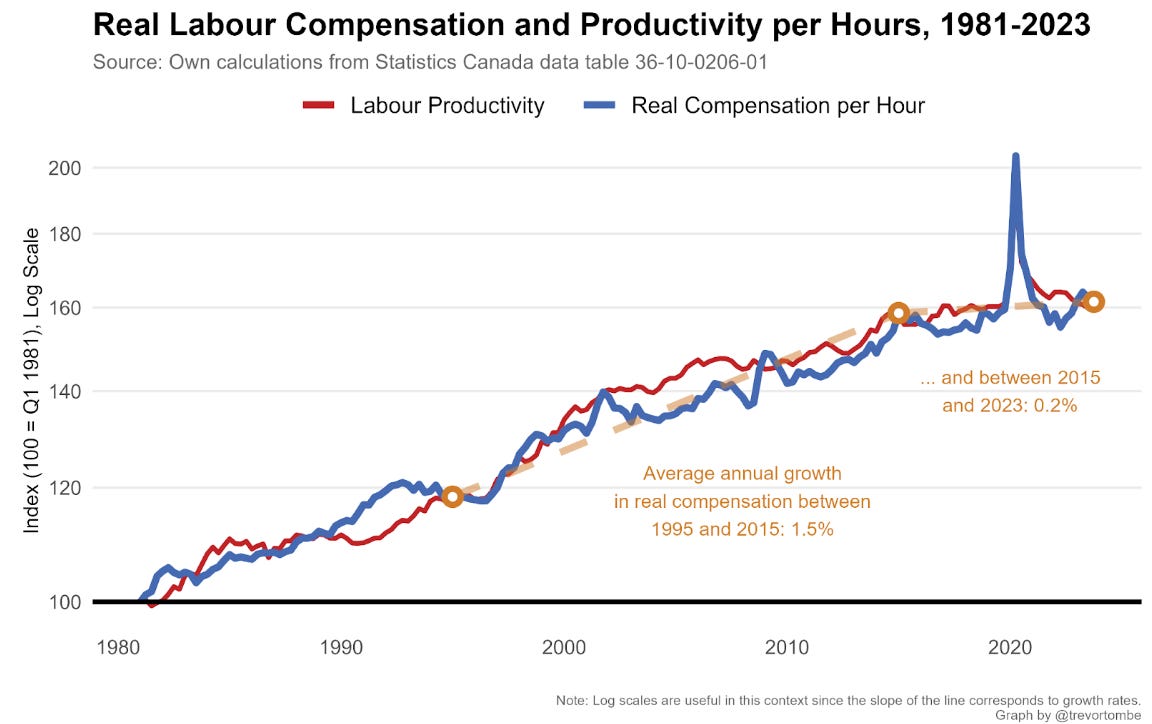
After adjusting for inflation, he finds average weekly earnings have increased only 1.6 percent between January 2015 and January 2024, or less than 0.2 percent per year.
Since the end of 2015, total compensation per hour (adjusted for inflation) has grown by only 1.9 percent. That’s 1.9 percent over the entire period from 2015 (Q1) to 2023 (Q4), which works out to 0.2 percent per year, just as Mikal found for weekly earnings.
And, as I illustrate below, it’s a massive drop from a growth rate of more than 1.5 percent per year that Canadian workers saw over the previous two decades. It’s also clear here why productivity matters: it drives growth in our earnings.
This slow growth is not only below Canada’s own recent past but also below what U.S. workers are seeing. Their average annual growth since 2015 has been 1 percent. Had Canada kept up, we’d earn 6 percent more today—nearly enough to cover higher prices.
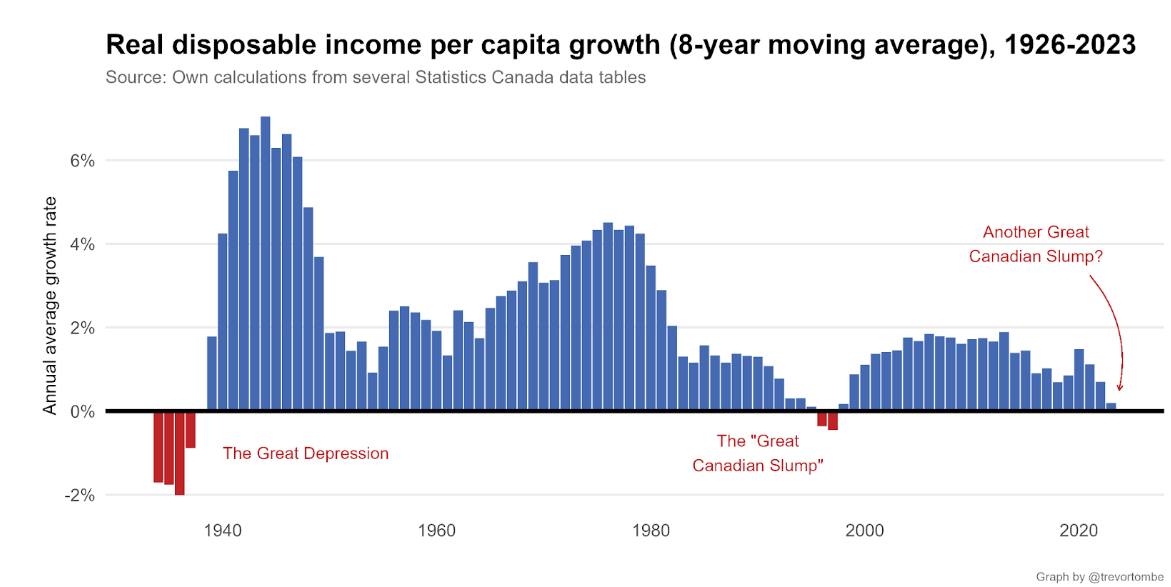
People are happier when the pie is growing, the pie is not growing. Real disposable income have flatlined over an 8 year period, something that has only happened twice in 100 years.
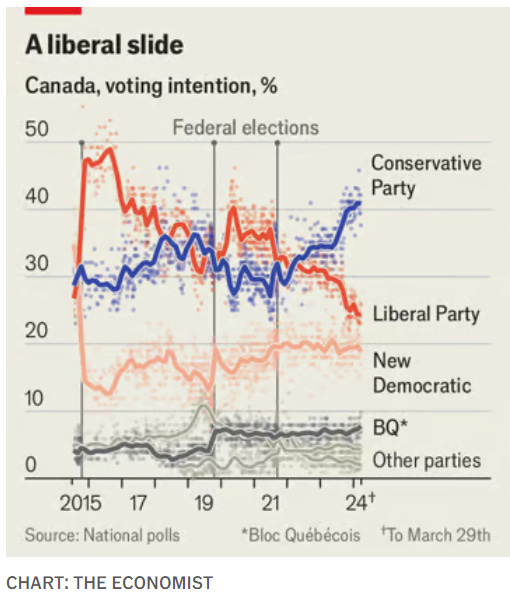
This contributes to why, there is an article in The Economist about Trudeau losing the country.
When Mr Trudeau took office, a household earning the median income could cover the costs of owning an average home by spending 39% of their pay, according to rbc, a bank. Now that figure is 64%.
Flatlining incomes and rising cost of living is not a good combo.
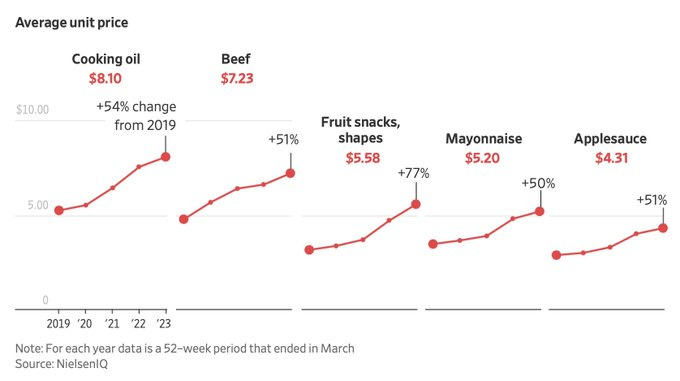
A WSJ analysis found that a commonly purchased basket of supermarket goods has increased in price by 36.5% over the past 4 years (+8.1% per year). This is much higher than the US Government CPI figures which show food price inflation of 25.2% over the last 4 years (+5.8%/year).
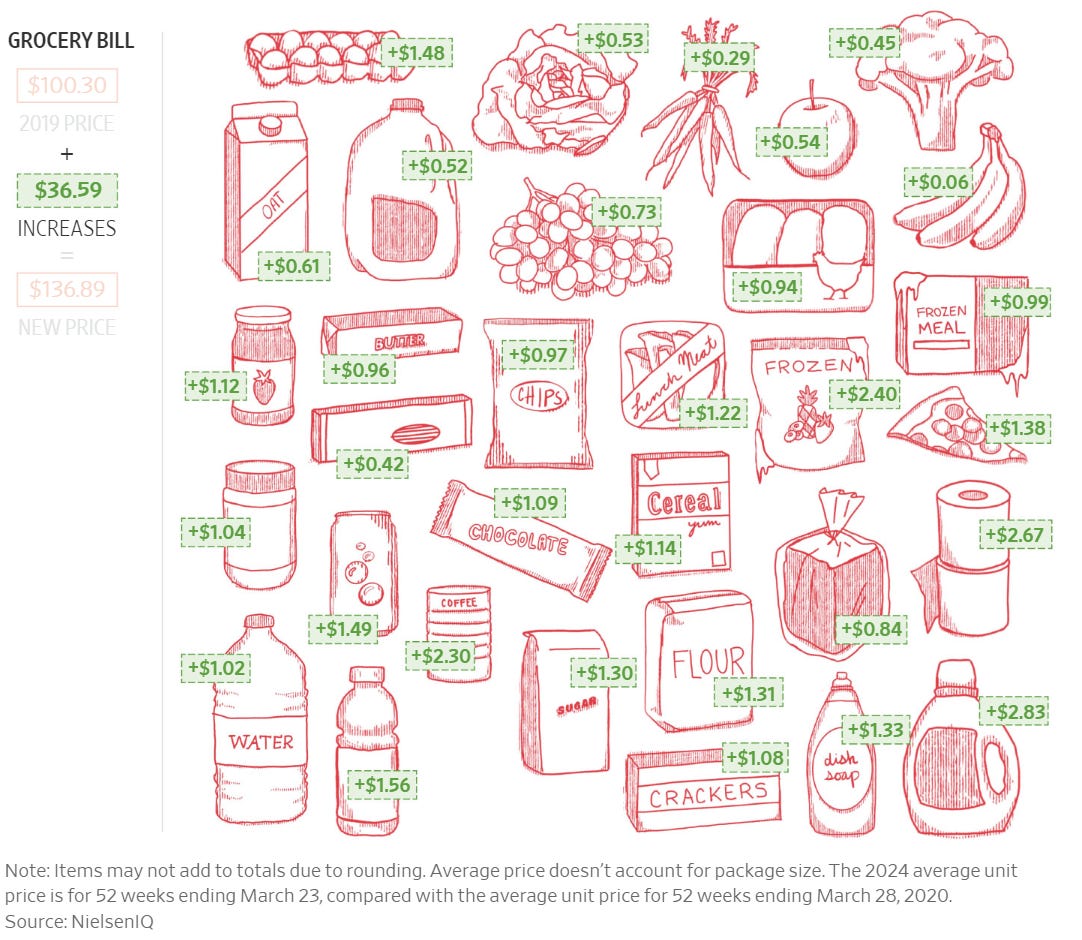
Some categories getting hit harder than others but its clear, prices are substantially higher than pre pandemic levels.
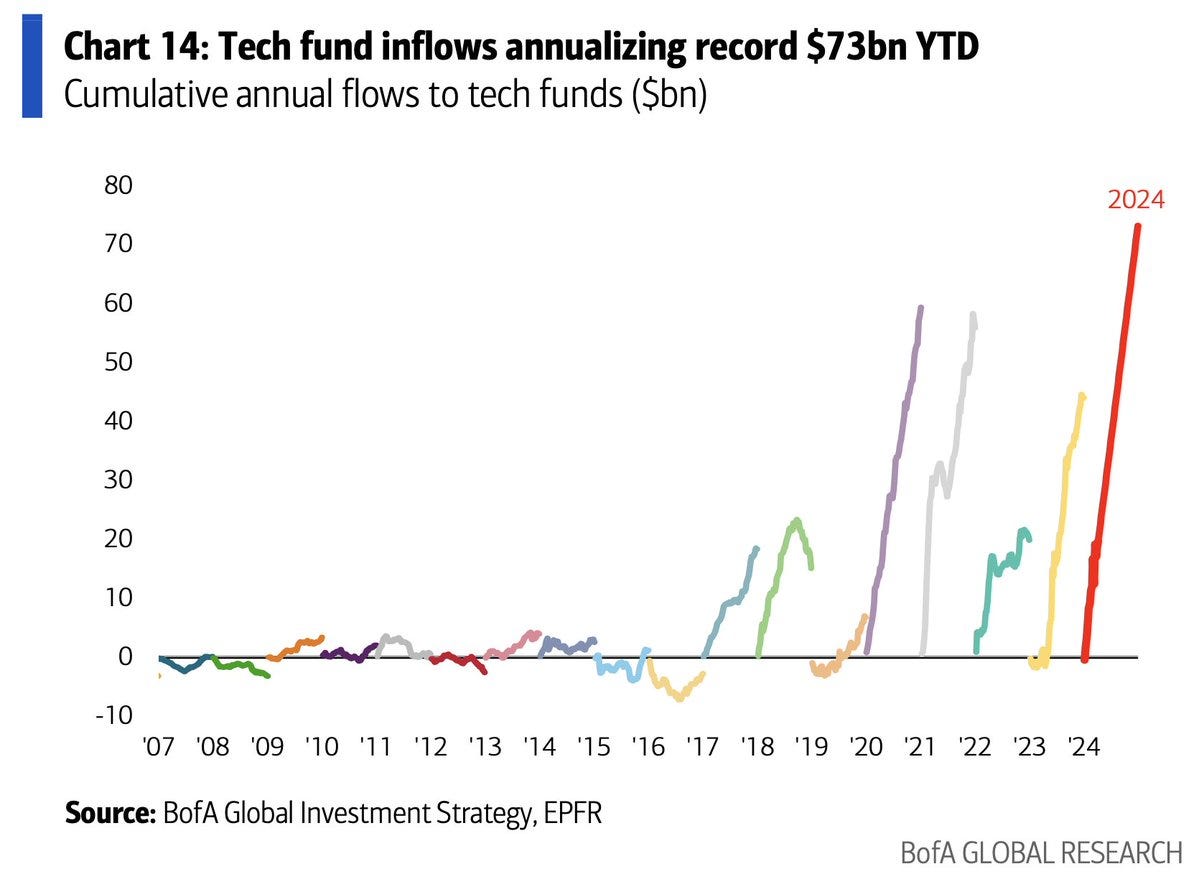
Amazing chart. The maturation of the big tech has brought on an era of technology inflows. Any other explanations or insights?
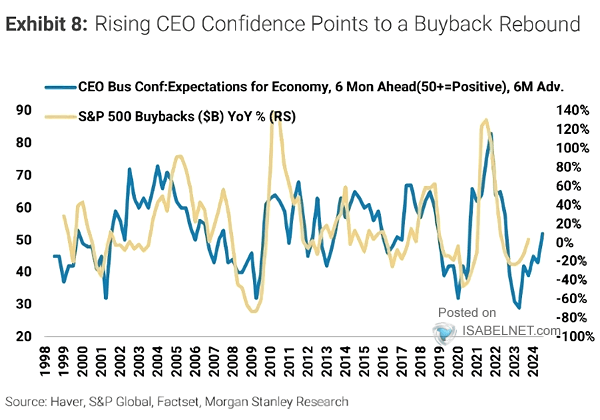
Seeing improving economic conditions in CEO confidence and buybacks follow. Without cratering CEO confidence, we don’t get layoffs and the economy likely hangs in there.
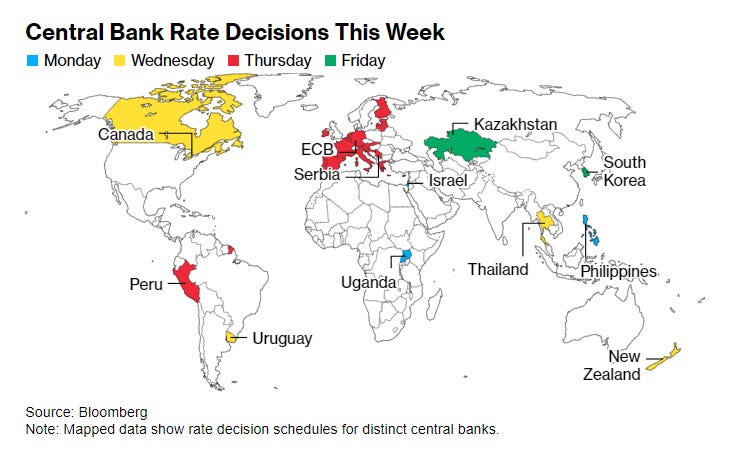
Big week for Central bank rate decisions that likely get pushed out as the global economy remains strong enough.
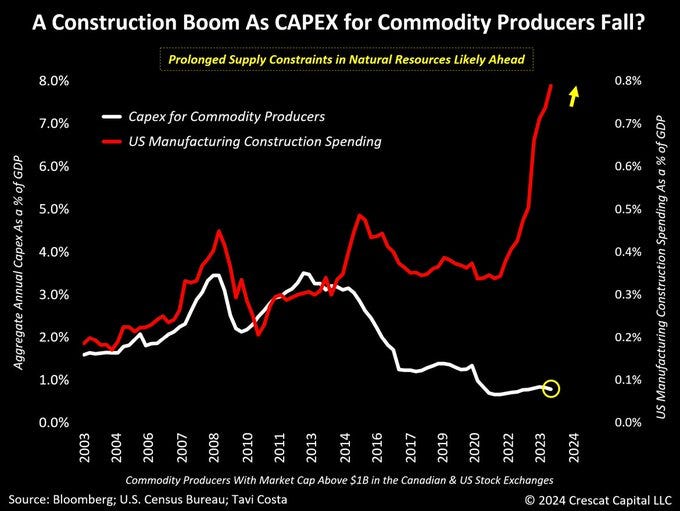
The US is seeing levels of manufacturing spend as a % of GDP that they haven’t seen in decades. If we are building factories, eventually underinvestment in commodity capex will cause commodities to rerate.
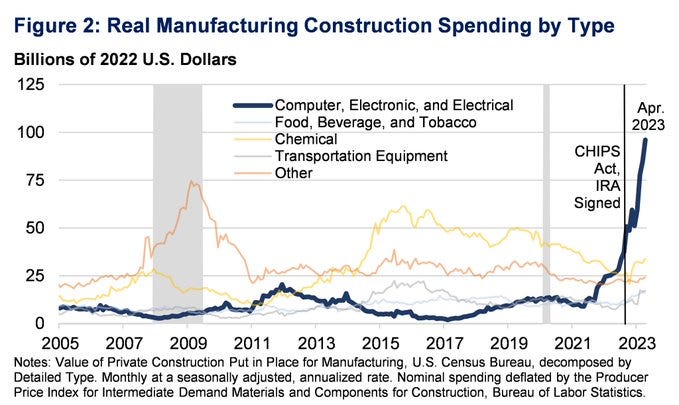
Most of the construction spend boost can be explained by the introduction of government incentives.
Yesterday TSMC was awarded up to $6.6B to build another fab in Arizona. Will be an amazing misallocation of capital if these fabs don’t work out on American soil.
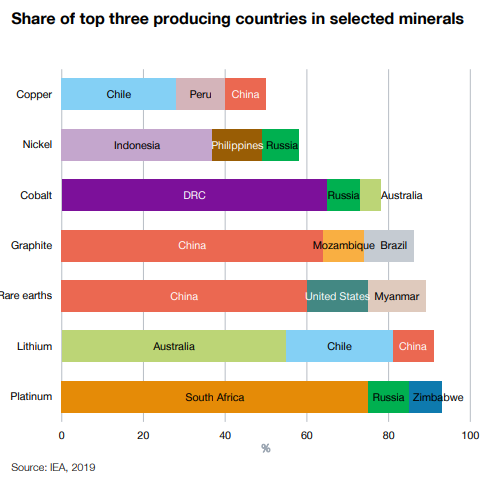
A multi-polar world is going to mean interesting things for resource protectionism.
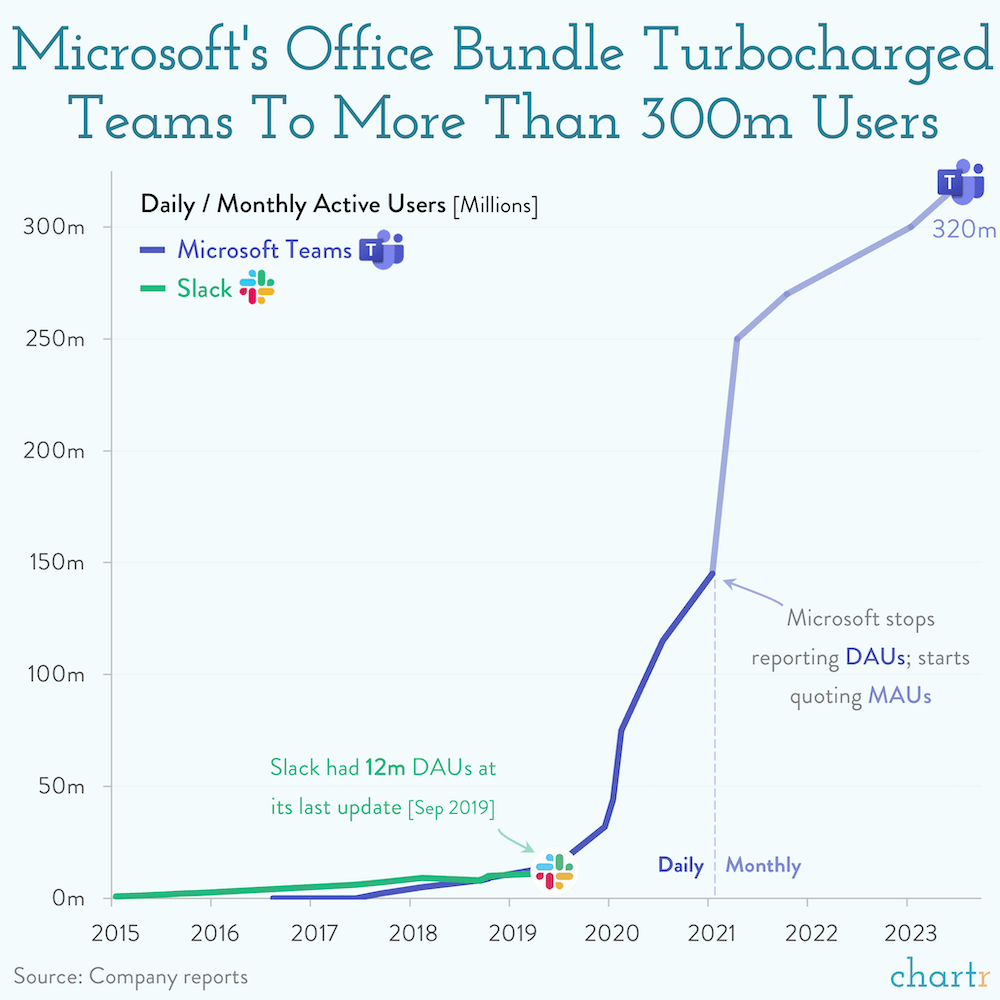
Power of the platform. Microsoft has grown Teams to more than 300M monthly active users through offering it as part of a bundle.
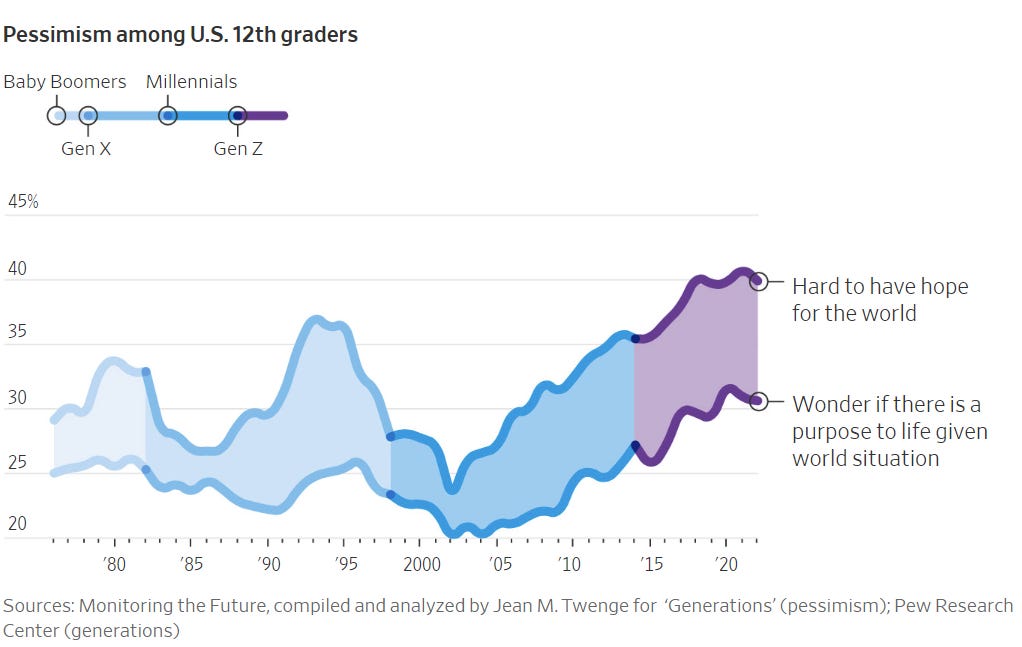
Why are young generations feeling so disillusioned (article)? My only guess goes back to, the pie isn’t growing as fast and younger generations have less opportunity.
At least in Canada, a high school educated individual could afford a home and a comfortable life working at the car factory… Most of those jobs have left now.
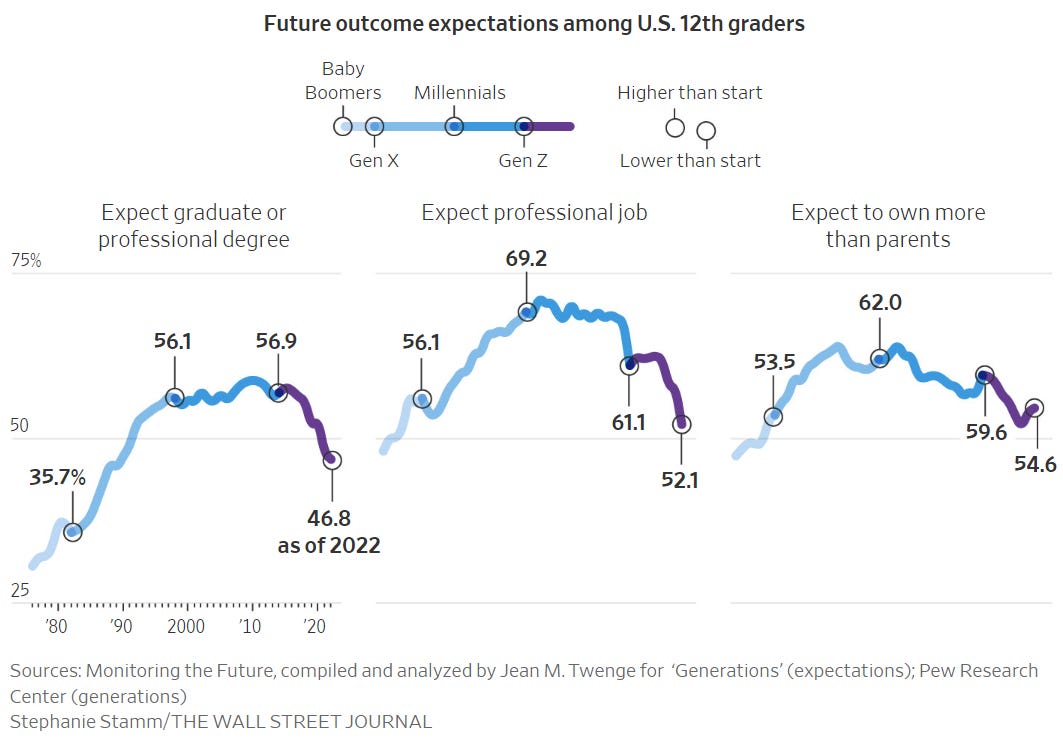
Another element could be social media and being able to compare yourself to others. You used to compare your life to your friends and neighbors, now with social media you are comparing yourself to millions of others. Comparing yourself to those living unrealistic lives for the “gram”.