The Biotech Renaissance

Dario Amodei, the CEO of Anthropic, was recently asked for a stock tip, and his response was that he believes biotechnology will soon undergo a renaissance. (link to clip)

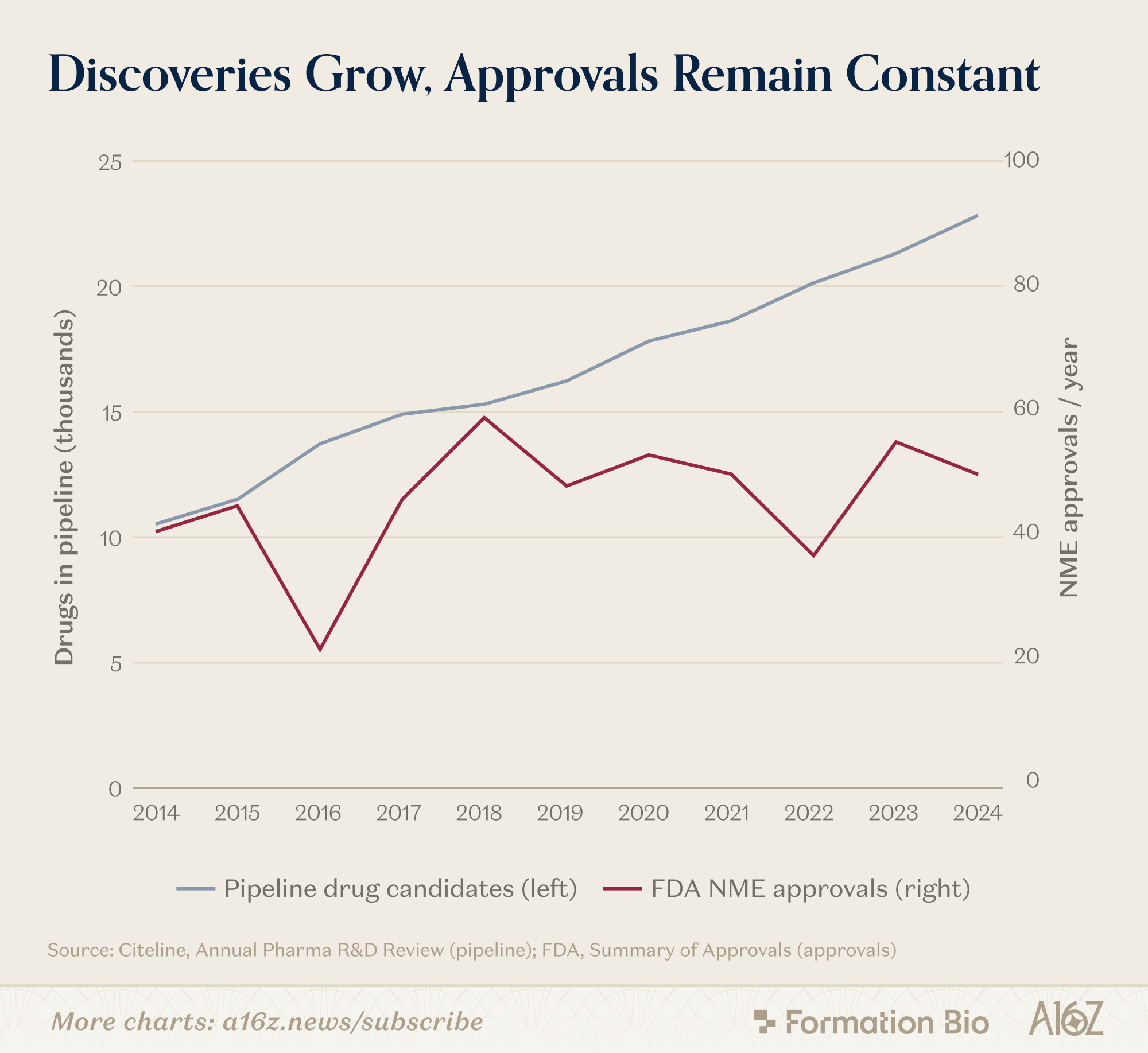
The first major shift is that drug discovery is becoming dramatically more efficient, though this trend began well before the current AI boom. Over the past decade, the industry has become much better at generating plausible therapeutic assets. The number of discovered drug candidates has roughly doubled, while the number of approved drugs has remained constant at around 50 per year. FDA approvals remain the primary bottleneck, and it is not clear that AI will solve this immediately but the FDA did unveil a package of regulatory tweaks to speed up the process yesterday. (a16z)
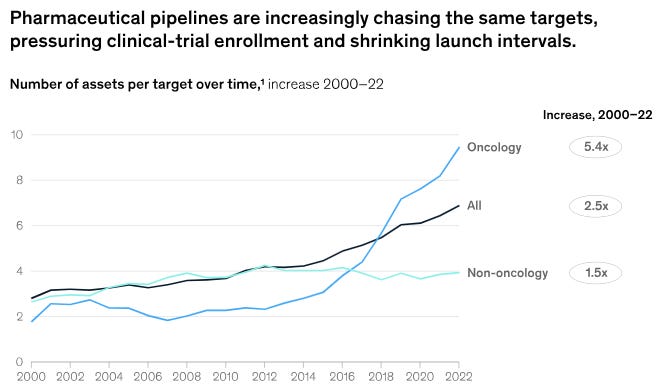
The space has also gotten significantly more competitive. In the past 20 years, the number of assets per target has increased by more than 2.5 times, with oncology leading the trend. In 2000, only 16% of the top ten pharma pipelines consisted of "herded targets" (defined as more than five assets pursuing the same target). By 2020, this figure had risen to 68%. (McKinsey)
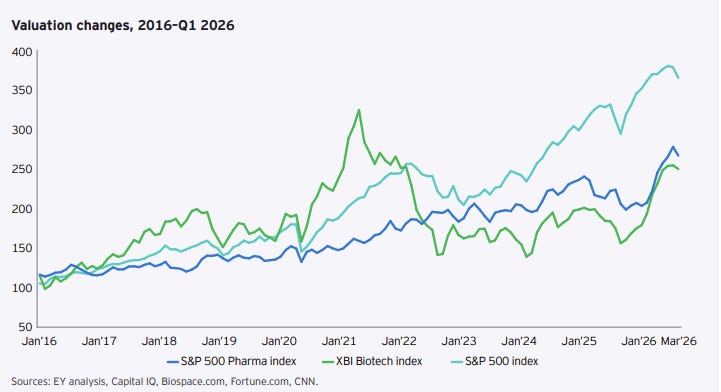
Performance in the biotech sector has recently rebounded after stagnating post-2021, though it still has not reclaimed those previous highs and has materially underperformed the S&P 500 since 2022. It is also worth noting that the return profile of major pharma is much more stable than that of more speculative biotech companies. (EY)
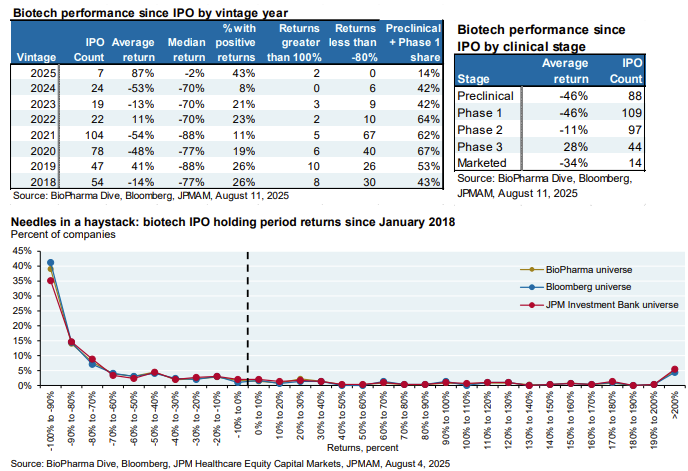
Dissecting the returns of biotech brings us to some interesting data. The average and median biotech company is quite a poor investment. A few years post-IPO, only about 20% of these companies show positive returns. An investor is actually more likely to be down more than 80% than up 100%. As the data shows, investing in biotech is closer to investing in venture capital than large-cap U.S. stocks, which makes sense because these are mostly pre-revenue companies. (JPM)
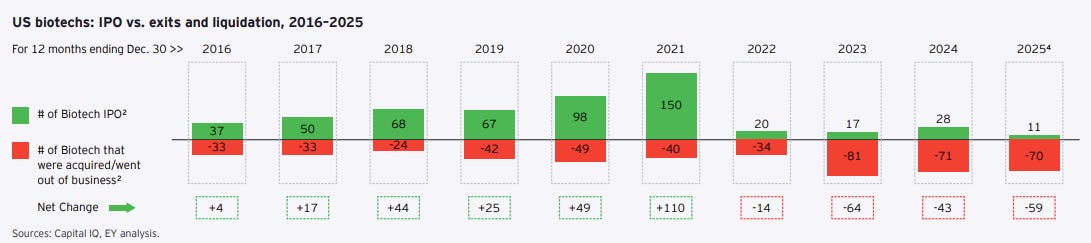
In recent years, despite increasing pipelines, the biotech universe has been contracting, meaning there have been more acquisitions and closures than IPOs. (EY)
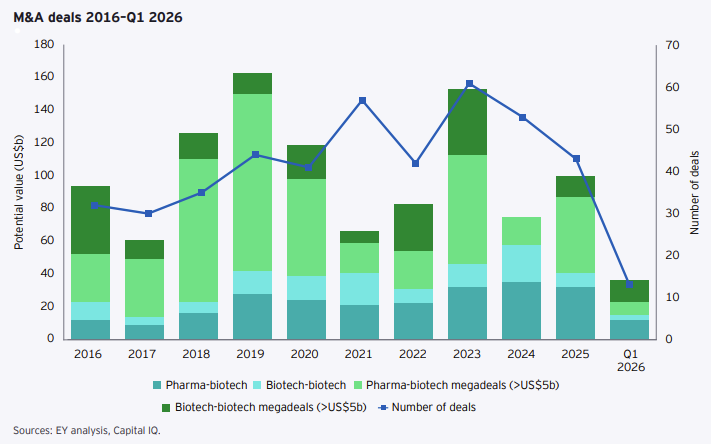
This contraction has not been driven by an M&A boom, as M&A deals have been running fairly close to the average for the previous decade. (EY)
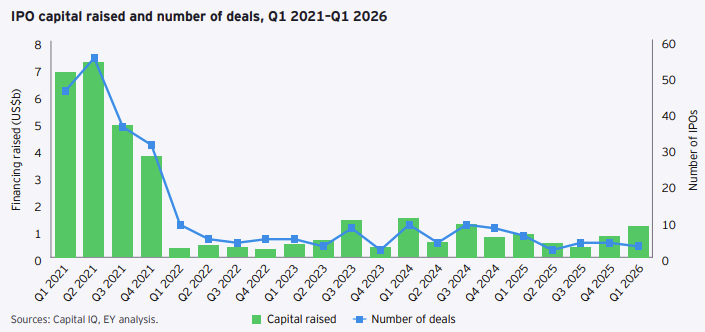
IPOs are certainly down from levels seen in 2021. The contraction could potentially be explained as a hangover from the 2021 bubble, where lower-quality assets found a window to go public. The current contraction represents these companies going out of business as easy money evaporated from the market. (EY)
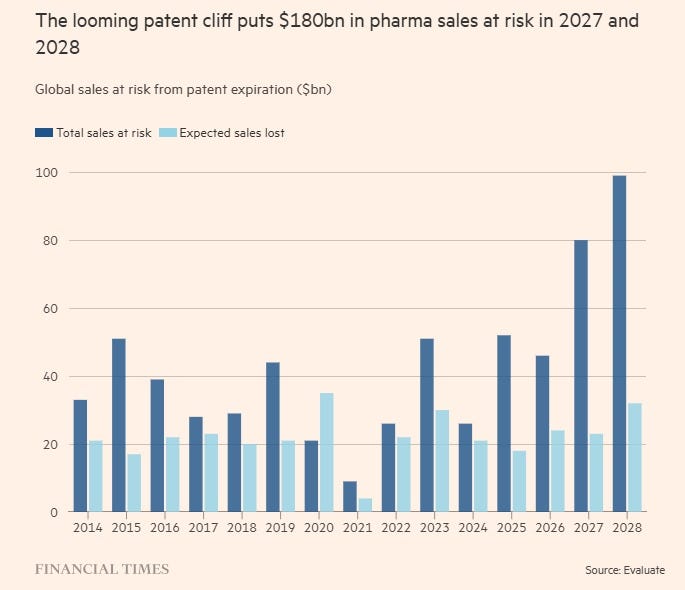
Biotech investors have been anxiously awaiting a major M&A wave, recognizing that large pharma needs to backfill revenue that is set to go off-patent in the coming years.(FT)
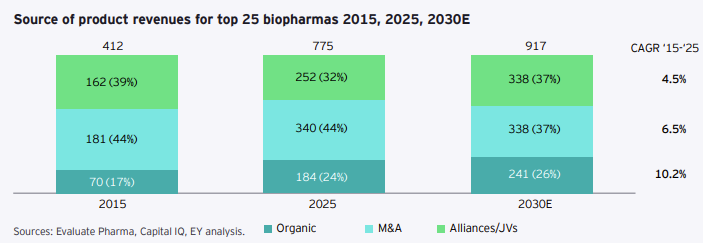
More than a third of revenues from major pharma companies comes from M&A. Biotech serves as a vital pipeline for future revenues, even though organic revenues also increased over the past decade. (EY)
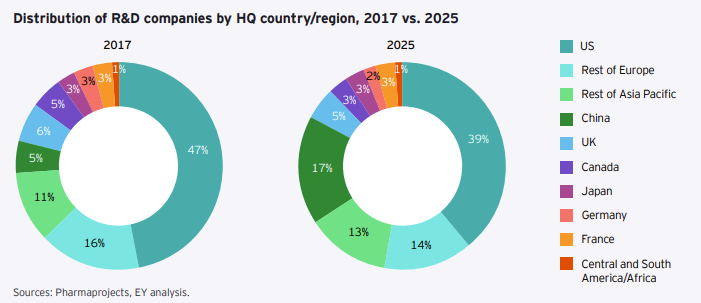
Today, an increasing amount of R&D is coming from China. The country is emerging as a major competitor to the U.S.-led system, mirroring a broader trend seen across almost every other industry, will the outcome of lower costs and gutting of Western industry be the same? (EY)
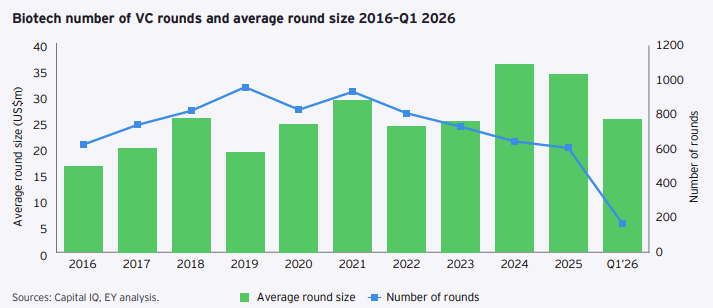
The number of venture-backed funding rounds is slowly declining, but the average round size has grown in recent years. (EY)
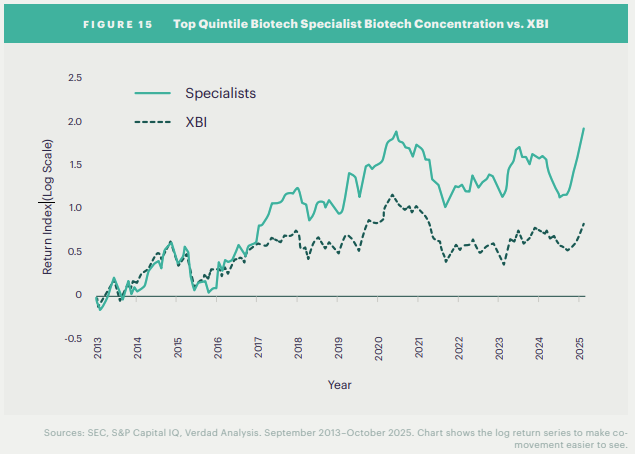
It remains unclear where the majority of AI-related value will ultimately accrue. However, given the complexity and rapid evolution of the space, I believe specialist managers are best positioned to identify the winners and, with the right partner, generate attractive returns. (Verdad)